
The popular Cherokee KL crossover, which sits between the smaller Compass and the larger Grand Cherokee in the global Jeep lineup, is the only vehicle used by the American company, which has been producing the Jeep EHB 3.2-liter V6 petrol engine since 2013. It generates 324 Nm (239 lb-ft) of torque, 275 horsepower (202 kW), and 29 mpg (8.1 l/100 km). The first Chrysler vehicle with a brand-new engine is the Cherokee.
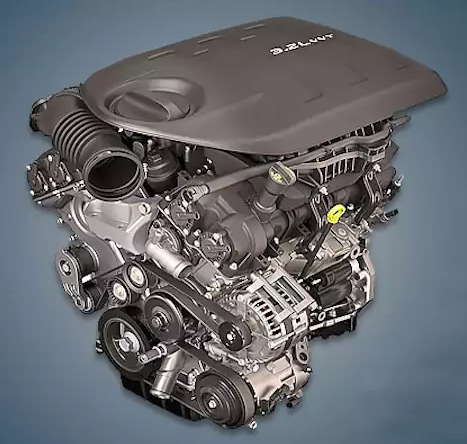
The Pentastar series consists of EHB, EHD, ERB, and ERC.
The engine was mounted on:
- Jeep Cherokee 5 (KL) in 2013 – …
Specifications
| Production years | 2013-… |
| Displacement, cc | 3239 |
| Fuel system | injector |
| Power output, hp | 275 |
| Torque output, Nm | 325 |
| Cylinder block | aluminum V6 |
| Block head | aluminum 24v |
| Cylinder bore, mm | 91 |
| Piston stroke, mm | 83 |
| Compression ratio | 10.7 |
| Features | DOHC |
| Hydraulic lifters | yes |
| Timing drive | chain |
| Phase regulator | Dual VVT |
| Turbocharging | no |
| Recommended engine oil | 5W-30 |
| Engine oil capacity, liter | 5.6 |
| Fuel type | petrol |
| Euro standards | EURO 5 |
| Fuel consumption, L/100 km (for Jeep Cherokee 2015) — city — highway — combined |
13.9 7.7 9.9 |
| Engine lifespan, km | ~320 000 |
Disadvantages of the EHB engine
The unit’s known issue is the phase shifters’ quick failure;
Frequent leaks from the oil cooler rank second in terms of frequency;
The vacuum pump’s electric motor frequently malfunctions in the version with the start-stop system;
The camshaft cams will begin to grind if the motor is not satisfied with the oil quality;
A low resource is another characteristic that sets the pump, thermostat, and dual-circuit oil pump apart.