
Produced between 1986 and 2006, the Jeep ERH or AMC 242 4.0-liter gasoline engine was found in nearly every brand of SUV, including the Wrangler, Cherokee, and Grand Cherokee. The engine was manufactured using the RENIX injection system until 1991, at which point it switched to its own from Mopar.
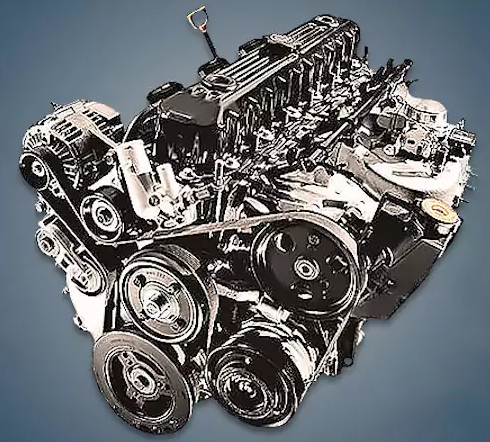
Internal combustion engines (EPE) are also part of the AMC series.
The engine was mounted on:
- Jeep Cherokee 2 (XJ) in 1987 – 2001;
- Jeep Comanche 1 (MJ) in 1987 – 1992;
- Jeep Grand Cherokee 1 (ZJ) in 1992 – 1998;
- Jeep Grand Cherokee 2 (WJ) in 1998 – 2004;
- Jeep Wrangler 1 (YJ) in 1991 – 1995;
- Jeep Wrangler 2 (TJ) in 1996 – 2006.
Specifications
| Production years | 1986-2006 |
| Displacement, cc | 3964 |
| Fuel system | injector |
| Power output, hp | 175 – 195 |
| Torque output, Nm | 300 – 320 |
| Cylinder block | cast iron R6 |
| Block head | cast iron 12v |
| Cylinder bore, mm | 98.4 |
| Piston stroke, mm | 86.7 |
| Compression ratio | 8.6 – 8.7 |
| Features | OHV |
| Hydraulic lifters | yes |
| Timing drive | chain |
| Phase regulator | no |
| Turbocharging | no |
| Recommended engine oil | 5W-30 |
| Engine oil capacity, liter | 5.7 |
| Fuel type | petrol |
| Euro standards | EURO 2/3 |
| Fuel consumption, L/100 km (for Jeep Grand Cherokee 2000) — city — highway — combined |
19.0 11.5 15.2 |
| Engine lifespan, km | ~450 000 |
Disadvantages of the ERH engine
Although the engine is very resource-efficient and reliable, it uses a lot of fuel;
A cylinder head marriage occurred between 1999 and 2001; the third or fourth cylinders were where they cracked.
Many have experienced exhaust manifold cracks as a result of a sagging support; the crankshaft rear oil seal frequently leaks during extended runs, and replacing it is expensive;
The fuel pump and the electric fan relay are also this motor’s weak points.