
Since 2019, the 3.0-liter diesel V6 Jeep EXJ or 3.0 EcoDiesel engine has been manufactured and installed in the well-liked Jeep Wrangler in the US market as well as a Gladiator-based pickup truck. RAM 1500 pickups have a comparable diesel engine installed under a different EXH index.
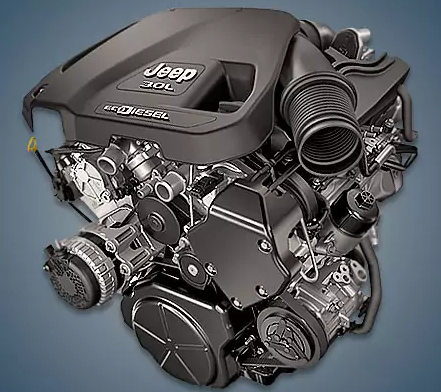
ENC, ENJ, ENS, ENR, EXF, EXJ, EXN, and EXA are all part of the VM Motori series.
Specifications
| Production years | since 2019 |
| Displacement, cc | 2987 |
| Fuel system | Common Rail |
| Power output, hp | 264 |
| Torque output, Nm | 600 |
| Cylinder block | cast iron V6 |
| Block head | aluminum 24v |
| Cylinder bore, mm | 83 |
| Piston stroke, mm | 92 |
| Compression ratio | 16.0 |
| Features | DOHC |
| Hydraulic lifters | yes |
| Timing drive | chain |
| Phase regulator | no |
| Turbocharging | yes |
| Recommended engine oil | 5W-40 |
| Engine oil capacity, liter | 8.5 |
| Fuel type | diesel |
| Euro standards | EURO 6 |
| Fuel consumption, L/100 km (for Jeep Wrangler 2021) — city — highway — combined |
10.7 8.1 9.4 |
| Engine lifespan, km | ~250 000 |
| Weight, kg | 220 |
The engine was installed on:
- Jeep Gladiator 2 (JT) since 2020;
- Jeep Wrangler 4 (JL) since 2019.
Disadvantages of the Jeep EXJ engine
A defective high-pressure fuel pump was swapped out for a new one in engines manufactured between 2019 and 2021.
This didn’t always work because parts of the pump were able to enter the fuel system.
To replace cracked EGR coolers, another recall campaign was conducted.
Additionally, sensitive turbo lag and oil cooler leaks are complained about on specialized forums.