
The Renegade crossover and several Fiat models, including the 500X, Siena, Punto, and Palio, use the 1.6-liter Jeep EJH or 1.6 E.torQ gasoline engine, which has been manufactured in Brazil since 2011. In essence, this power unit is an improved Tritec motor.
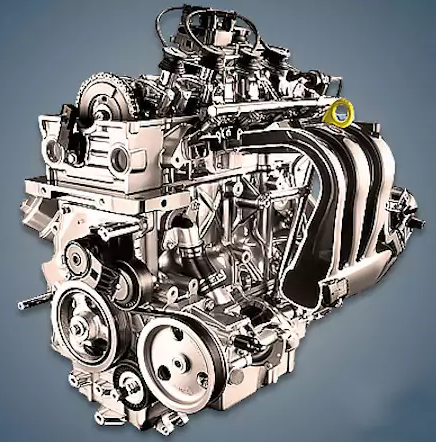
There is still only one internal combustion engine in the E.torQ series.
The engine was mounted on:
- Jeep Renegade 1 (BU) in 2014 – …
Specifications
| Production years | 2011-… |
| Displacement, cc | 1598 |
| Fuel system | injector |
| Power output, hp | 110 |
| Torque output, Nm | 152 |
| Cylinder block | aluminum R4 |
| Block head | aluminum 16v |
| Cylinder bore, mm | 77 |
| Piston stroke, mm | 85.8 |
| Compression ratio | 11 |
| Features | SOHC |
| Hydraulic lifters | yes |
| Timing drive | chain |
| Phase regulator | no |
| Turbocharging | no |
| Recommended engine oil | 5W-30 |
| Engine oil capacity, liter | 4.6 |
| Fuel type | petrol |
| Euro standards | EURO 5 |
| Fuel consumption, L/100 km (for Jeep Renegade 2015) — city — highway — combined |
8.8 5.1 6.5 |
| Engine lifespan, km | ~250 000 |
Disadvantages of the EJH engine
Since this power unit was just manufactured, breakdown statistics have not yet been gathered;
Only the Jeep Renegade has this unit installed, and its owners don’t have many complaints;
The sole drawback is that its power characteristics are mediocre;
This is, in theory, an engine for third-world nations, where it has spread widely.