
From 1998 to 2013, pickups and SUVs like the Ram, Durango, Cherokee, and Grand Cherokee were equipped with the 4.7-liter V8 Jeep EVA or PowerTech 4.7 Corsair engine. This power unit had a Flex-Fuel version with its own EVD index.
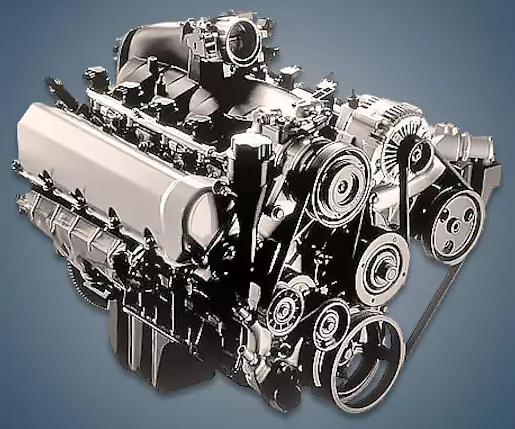
The EKG, EVC, and EVE engines are also part of the PowerTech series.
The engine was mounted on:
- Chrysler Aspen 1 (HG) in 2006 – 2008;
- Dodge Dakota 2 (DN) in 2000 – 2004;
- Dodge Dakota 3 (ND) in 2004 – 2011;
- Dodge Durango 1 (DN) in 1999 – 2003;
- Dodge Durango 2 (HB) in 2003 – 2008;
- Dodge Ram 3 (DT) in 2001 – 2008;
- Dodge Ram 4 (DS) in 2008 – 2013;
- Jeep Grand Cherokee 2 (WJ) in 1998 – 2004;
- Jeep Grand Cherokee 3 (WK) in 2004 – 2010;
- Jeep Commander 1 (XK) in 2005 – 2010;
- Mitsubishi Raider 1 (ND) in 2005 – 2009.
Specifications
| Production years | 1998-2013 |
| Displacement, cc | 4701 |
| Fuel system | injector |
| Power output, hp | 230 – 235 |
| Torque output, Nm | 390 – 410 |
| Cylinder block | cast iron V8 |
| Block head | aluminum 16v |
| Cylinder bore, mm | 93 |
| Piston stroke, mm | 86.5 |
| Compression ratio | 9.0 |
| Features | SOHC |
| Hydraulic lifters | yes |
| Timing drive | chain |
| Phase regulator | no |
| Turbocharging | no |
| Recommended engine oil | 5W-30 |
| Engine oil capacity, liter | 5.7 |
| Fuel type | petrol |
| Euro standards | EURO 3/4 |
| Fuel consumption, L/100 km (for Jeep Grand Cherokee 2000) — city — highway — combined |
21.5 12.5 15.8 |
| Engine lifespan, km | ~350 000 |
Disadvantages of the EVA engine
It is not advisable to reduce the lubricant’s quality here because of the extremely small oil channels;
Hydraulic lifters frequently become stuck when inexpensive oils are used;
The valve seats falling out is another known issue with this motor;
The timing resource, which consists of three chains, is roughly 200–250 thousand kilometers; however, the owners’ primary expenses are related to extremely high fuel consumption.