
Mercedes-Benz’sOM314is a four-stroke diesel engine with a volume of 3780 cubic centimeters, or 345 cubic inches. It is one of the 300 series of engines that were put into production soon after World War II. In particular, OM 301, which generated 55 horsepower on 6 cylinders, was superseded by OM 314, which debuted in 1964 concurrently with the 6-cylinder equivalent of OM 352.
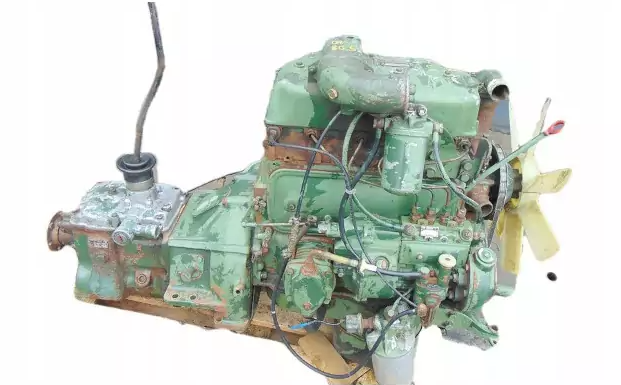
The 6-cylinder OM301 engine that was available at the time was insufficient to power agricultural machinery. OM314 was one of the two power units that the designers prepared to replace. The new inline 4-cylinder, 8-valve engine produced 68 horsepower.
OM314 and OM314A were the two 314 engine models. Combine harvesters use OM314. The turbo version of the engine is denoted by the letter “A.”
Specifications
| Engine’s type | diesel |
| Also called | OM 314 |
| Production years | 1964 |
| End of release | 1989 |
| Power output, hp / kW | 85 / 63 at 2800 rpm (for OM 314.948) |
| Displacement, l | 3780 |
| Number of cylinders | 4 |
| Valves | 8 |
| Torque output, Nm / rpm | 1800 |
| Compression ratio (compression) | 17.0:1 |
| Cylinder bore, mm | 97 |
| Piston stroke, mm | 128 |
| Crankshaft bearings | 5 |
| Configuration | inline |
| Fuel type | diesel |
| Fuel system | inline injection pump |
| Cylinder head | OHV |
| Timing mechanism | spur gear |
| Timing | rocker arm |
| Cooling | water |
The motor is also found on combines and tractors in the open spaces of the home. For the 314 engine, the majority of agro-industrial businesses specifically replaced the motors in their machinery. Because of its technical specifications, which enable installation on any truck or agricultural equipment and make the 314 very popular, purchasing this unit is very challenging.
Frequent problems
Due to their intricate architecture and requirement for specialized equipment, all Mercedes motors cannot be overhauled. However, the power unit can be replaced after a run of 500–600 thousand kilometers.
The OM314’s timing gear wear is one of the most frequent grievances. This issue can only occur if the owner fails to appropriately regulate the coolant and oil levels and fails to replace certain parts on schedule. Additionally, there might be an issue with the valve adjustment.