
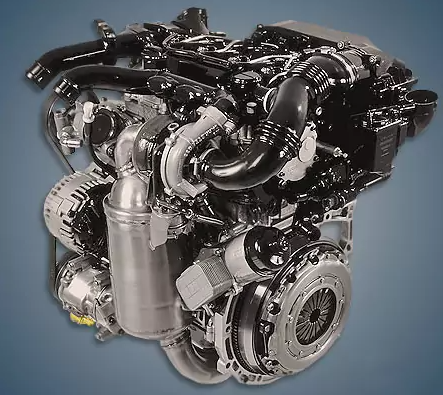
From 2009 to 2016, the 1.6-liter Peugeot DV6DTED or DV6D 1.6 e-HDi 92 engine was manufactured and fitted to numerous well-liked compact models of the French company. There were two versions of this unit available: 9HP with a particulate filter and 9HJ without one.
DV6TED4, DV6ATED4, DV6BTED4, DV6CTED, DV6DTED, DV6ETED, DV6FCTED, DV6FDTED, and DV6FETED are additional diesels in the DV6 family.
An upgraded DV6A diesel unit made its debut under the DV6D index in 2009. The primary distinction from its predecessor was the 8-valve head rather than the 16-valve, which allowed the chain between the camshafts—which frequently stretched—to be eliminated. Here, the four-cylinder aluminum block with cast-iron liners remained the same.
All engine versions were supercharged using a Mitsubishi TD02H2 turbine with a wastegate, and fuel was injected using the Bosch Common Rail system with electromagnetic injectors. The e-HDi nameplate indicates that the majority of the units had a Start-Stop system. This engine’s DV6DTEDM modifications were made for Euro 4 without a particulate filter.
Specifications
| Production years | 2009-2016 |
| Displacement, cc | 1560 |
| Fuel system | Common Rail |
| Power output, hp | 92 |
| Torque output, Nm | 230 |
| Cylinder block | aluminum R4 |
| Block head | aluminum 8v |
| Cylinder bore, mm | 75 |
| Piston stroke, mm | 88.3 |
| Compression ratio | 16.0 |
| Hydraulic lifters | yes |
| Timing drive | belt |
| Phase regulator | no |
| Turbocharging | Mitsubishi TD02H2 |
| Recommended engine oil | 5W-30, 5W-40 |
| Engine oil capacity, liter | 4.3 |
| Fuel type | diesel |
| Euro standards | EURO 4/5 |
| Fuel consumption, L/100 km (for Peugeot 208 2014) — city — highway — combined |
4.5 3.4 3.8 |
| Engine lifespan, km | ~500 000 |
| Weight, kg | 135 |
The engine was installed on:
- Citroen C3 II (A51) in 2009 – 2014;
- Citroen C3 Picasso I (A58) in 2011 – 2015;
- Citroen DS3 I (A55) in 2010 – 2015;
- Citroen C-Elysee I (R31) in 2012 – 2016;
- Citroen C4 II (B71) in 2010 – 2014;
- Citroen C4 Cactus II (F3) in 2014 – 2015;
- Citroen C4 Picasso II (B78) in 2013 – 2015;
- Citroen Berlingo II (B9) in 2010 – 2015;
- Peugeot 207 I (A7) in 2009 – 2013;
- Peugeot 208 I (A9) in 2012 – 2015;
- Peugeot 2008 I (A94) in 2013 – 2015;
- Peugeot 301 I (M33) in 2012 – 2016;
- Peugeot 308 I (T7) in 2010 – 2014; 308 II (T9) in 2013 – 2015;
- Peugeot Partner II (B9) in 2010 – 2015.
Disadvantages of the DV6DTED engine
This series’ 8-valve engines, which could produce up to 100 horsepower, had a Bosch CP4S1 injection pump with jammed plunger rollers. After that, they started inserting chips into the system. This pump was used in many diesel engines before the manufacturer realized it.
Rarely do these power units experience an unplanned valve plate separation, which can be fatal for motors. Most likely, a batch of faulty valves ended up on the conveyor.
Here, as in any contemporary diesel engine, the metering and EGR valves coke very quickly, causing the motor to operate unsteadily and jam.
Additionally, antifreeze frequently leaks from under the oil filter heat exchanger gasket and oil frequently climbs from under the valve cover in diesel engines of this series. Additionally, the camshaft cams as well as the rocker are destroyed when the timing belt breaks.