
The top models of the company’s well-known 407 and 607 were equipped with the 3.0-liter V6 engine of the Peugeot ES9A or XFV, which was manufactured in Douvrin between 2005 and 2009.
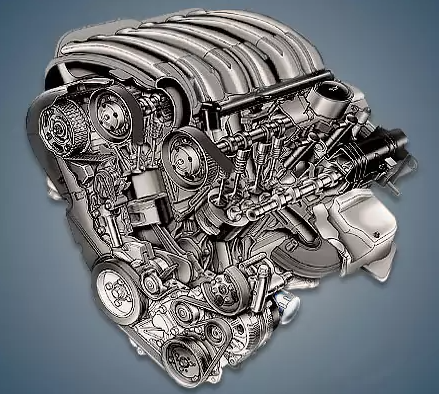
The ES family of engines includes the ES9J4, ES9J4S, and ES9A.
The engine was mounted on:
- Peugeot 407 I (D2) in 2005 – 2009;
- Peugeot 607 I (Z8/Z9) in 2005 – 2009;
- Citroen C5 II (X7) in 2008 – 2009;
- Citroen C6 I (X6) in 2005 – 2009.
Specifications
| Production years | 2005-2009 |
| Displacement, cc | 2946 |
| Fuel system | injector |
| Power output, hp | 211 |
| Torque output, Nm | 290 |
| Cylinder block | aluminum V6 |
| Block head | aluminum 24v |
| Cylinder bore, mm | 87 |
| Piston stroke, mm | 82.6 |
| Compression ratio | 10.9 |
| Features | no |
| Hydraulic lifters | yes |
| Timing drive | belt |
| Phase regulator | VTC, intake |
| Turbocharging | no |
| Recommended engine oil | 5W-30 |
| Engine oil capacity, liter | 4.75 |
| Fuel type | petrol |
| Euro standards | EURO 4 |
| Fuel consumption, L/100 km (for Peugeot 407 2009) — city — highway — combined |
14.5 7.0 9.8 |
| Engine lifespan, km | ~360 000 |
| Weight, kg | 195 |
Disadvantages of the Peugeot ES9A engine
The majority of engine issues are linked to using subpar oil or gasoline;
Candles rapidly deteriorate due to poor fuel, and the ignition coils follow;
There are four types of lambda probes that fail for the same reason.
Many people put off replacing the expensive timing belt, which requires a significant overhaul, because non-original grease frequently leaks from gaskets and seals.