
The 2.0L 3S and 2.2L 5S are the other two engines in the S-series, with the Toyota 4S being the newest. The motor, which took the place of the previous 1.8l 1S, is an exact replica of the 3S motor; the intake and exhaust manifolds, as well as the cylinder diameter, have been reduced from 86 mm to 82.5 mm.
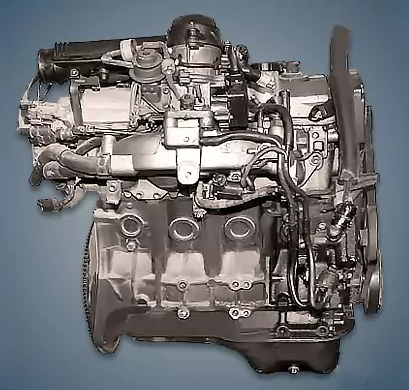
- The first single-injection version, the 4S-Fi, has a 9.3 compression ratio and 105 horsepower. These models were manufactured up until 1991.
- The 4S-FE Gen 1 is an upgraded model with distributor injection and an additional 115 horsepower. They were made between 1989 and 1999.
- Introduced in 1995, the 4S-FE Gen 2 has a 9.5 compression ratio and 125 horsepower.
The following design elements are present in the 4S-FE engine:
- The block’s cast iron body has four cylinders machined into it, with an in-line arrangement and a hardened surface through honing;
- When the block is cast, the cooling jacket is created inside;
- Engine oil with viscosities of 5W30 and 10W30 is advised;
- two DOHC camshafts that distribute the fuel mixture;
- existence of a multi-point injection MPFi system;
- ignition system DIS-2 that does not distribute sparks;
The engines in the S family are 4S-Fi, 4S-FE, 3S-FC, 3S-FE, 3S-FSE, 3S-GE, 3S-GTE, and 5S-FE.
The 4S-Fi engine was set up on:
- Toyota Camry 2 (V20) in 1986 – 1992;
- Toyota Carina 5 (T170) in 1988 – 1992;
- Toyota Corona 9 (T170) in 1987 – 1992;
- Toyota Mark II 6 (X80) in 1988 – 1992.
The 4S-FE engine was installed on:
- Toyota Caldina 1 (T190) in 1992 – 1995;
- Toyota Camry V30 in 1990 – 1994; Camry V40 in 1994 – 1998;
- Toyota Carina 5 (T170) in 1989 – 1992; Carina 6 (T190) in 1992 – 1996;
- Toyota Corona 9 (T170) in 1989 – 1992; Corona 10 (T190) in 1992 – 1996;
- Toyota Curren 1 (T200) in 1994 – 1998;
- Toyota Mark II 6 (X80) in 1990 – 1995; Mark II 7 (X90) in 1992 – 1996.
Specifications
| Production years | 1986-1992 (4S-Fi) 1989-1999 (4S-FE) |
| Displacement, cc | 1838 |
| Fuel system | single injection (4S-Fi) injector (4S-FE) |
| Power output, hp | 105 – 115 (4S-Fi) 115 – 125 (4S-FE) |
| Torque output, Nm | 150 – 160 (4S-Fi) 155 – 165 (4S-FE) |
| Cylinder block | cast iron R4 |
| Block head | aluminum 16v |
| Cylinder bore, mm | 82.5 |
| Piston stroke, mm | 86 |
| Compression ratio | 9.3 (4S-Fi) 9.3 – 9.5 (4S-FE) |
| Features | DOHC |
| Hydraulic lifters | no |
| Timing drive | belt |
| Phase regulator | no |
| Turbocharging | no |
| Recommended engine oil | 5W-30, 5W-40 |
| Engine oil capacity, liter | 3.9 |
| Fuel type | petrol |
| Euro standards | EURO 1 (4S-Fi) EURO 2 (4S-FE) |
| Fuel consumption, L/100 km (for Toyota Corona 1995) — city — highway — combined |
10.5 6.4 8.0 |
| Engine lifespan, km | ~350 000 |
| Weight, kg | 140 |
Disadvantages of the Toyota 4S engine
The injection pump is no longer functional. Along with the breakdown, there is a gasoline leak into the crankcase and the connecting rod and piston group break down. The primary symptoms include an increase in oil with a distinctive gasoline odor, twitching while moving, uneven work, frequent stops, and floating speed. All you have to do is swap out the injection pump.
exhaust gas recirculation due to a stuck EGR valve system. The formation of tar as a result of subpar fuel is the cause. Interruptions in the unit’s rhythm and speed are symptoms. The valve needs to be muted or cleaned on a regular basis.
The engine stalls and loses RPM. Throttle valve module flushing is the solution to idle issues. Cleaning the intake manifold is also necessary. It’s possible that the fuel pump or air filter broke.
Burn from gasoline (sometimes severe). The nozzles, idle valve, throttle valve, and ignition must all be cleaned.
vibration. One of the cylinders stopping or the aggregate pad becoming loose are the causes of malfunctions.
overheated motor. The cause is the radiator cap, which needs to be changed.
The 4S is a fully functional and even highly motivated unit when properly cared for. The resource is easily over 300,000 kilometers.