
For pickups and SUVs, the 2.7-liter Toyota 3RZ-FE engine was manufactured in Japan between 1994 and 2004. Due to the presence of two balancer shafts in the crankcase, the engineers had to complicate the design of one of the largest 4-cylinder power units in the line.
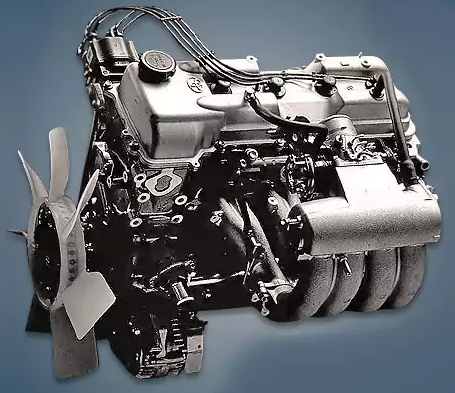
The most successful model in the “RZ” series of motors was 3RZ-FE. Because of the intricate balance shafts used in the design, Toyota engineers were able to minimize the drawbacks of the inline 4-cylinder layout while maximizing its benefits (low manufacturing cost, simplicity, and reliability of operation).
As a result, Toyota was given a reasonably strong and reasonably priced gasoline engine, which was successfully installed on the company’s jeeps and many minivans for 12 years, both domestically and in other global automotive markets (Europe, North America, Asia, and the Middle East).
The engines in the RZ family are 1RZ-E, 2RZ-E, 2RZ-FE, and 3RZ-FE.
The engine was mounted on:
- Toyota 4Runner 3 (N180) in 1995 – 2002;
- Toyota HiAce 4 (H100) in 1994 – 2004;
- Toyota Hilux N150 in 1997 – 2004;
- Toyota LC Prado 90 (J90) in 1996 – 2002; LC Prado 120 (J120) in 2002 – 2004;
- Toyota Tacoma 1 (N140) in 1995 – 2004.
Specifications
| Production years | 1994-2004 |
| Displacement, cc | 2693 |
| Fuel system | injector MPI |
| Power output, hp | 145 – 150 |
| Torque output, Nm | 230 – 240 |
| Cylinder block | cast iron R4 |
| Block head | aluminum 16v |
| Cylinder bore, mm | 95 |
| Piston stroke, mm | 95 |
| Compression ratio | 9.5 – 10 |
| Features | ESA |
| Hydraulic lifters | no |
| Timing drive | chain |
| Phase regulator | no |
| Turbocharging | no |
| Recommended engine oil | 5W-30 |
| Engine oil capacity, liter | 5.4 |
| Fuel type | petrol |
| Euro standards | EURO 2/3 |
| Fuel consumption, L/100 km (for Toyota Land Cruiser Prado 2000) — city — highway — combined |
17.8 10.2 13.2 |
| Engine lifespan, km | ~500 000 |
| Weight, kg | 175 |
Disadvantages of the 3RZ-FE engine
Because of the design of the 3RZ series of motors, major issues hardly ever occur when they are operating correctly. Above all, the engine’s and its parts’ simple yet dependable design is the key.
The most important things are to perform routine maintenance, promptly adjust the valves, fill in oil from only reputable manufacturers, and refuel with premium gasoline. You can permanently put major repairs out of your mind with this method.
The unit’s lifespan frequently surpasses 400 thousand kilometers. Every 200,000 kilometers, we must remember to check the timing chain for relaxation. The issue is usually accompanied by a distinctive sound.