
From 2001 to 2010, the company produced the 1.4-liter Volkswagen BCA 16v engine, which was fitted to well-known company models like the Golf, Bora, Caddy, and the new Beetle. Many people are familiar with this power unit from the Skoda Octavia Tour.
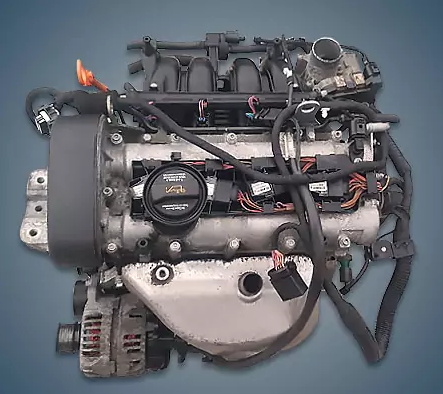
AEX, AKQ, AXP, BBY, BCA, BUD, CGGA, and CGGB are all part of the EA111-1.4 series.
Specifications
| Production years | 2001-2010 |
| Displacement, cc | 1390 |
| Fuel system | injector |
| Power output, hp | 75 |
| Torque output, Nm | 126 |
| Cylinder block | aluminum R4 |
| Block head | aluminum 16v |
| Cylinder bore, mm | 76.5 |
| Piston stroke, mm | 75.6 |
| Compression ratio | 10.5 |
| Features | DOHC |
| Hydraulic lifters | yes |
| Timing drive | belt |
| Phase regulator | no |
| Turbocharging | no |
| Recommended engine oil | 5W-30 |
| Engine oil capacity, liter | 3.2 |
| Fuel type | petrol |
| Euro standards | EURO 3/4 |
| Fuel consumption, L/100 km (for VW Golf 5 2005) — city — highway — combined |
8.9 5.6 6.8 |
| Engine lifespan, km | ~280 000 |
The engine was installed on:
- Volkswagen Beetle 1 (9C) in 2001 – 2010;
- Volkswagen Bora 1 (1J) in 2002 – 2005;
- Volkswagen Caddy 3 (2K) in 2003 – 2006;
- Volkswagen Golf 4 (1J) in 2002 – 2006; Golf 5 (1K) in 2003 – 2006;
- Seat Leon 1 (1M) in 2003 – 2005;
- Skoda Octavia 1 (1U) in 2002 – 2010.
Disadvantages of the VW BCA engine
Although this device is thought to be fairly dependable, there is one annoying aspect.
The lubricant pressure decreases and the oil receiver becomes clogged after 100,000 kilometers.
A wedge of the crankshaft or camshaft eventually results from a lack of oil.
The valves bend regardless, but timing belts may break due to aging.
Noisy operation and a limited supply of ignition coils are additional drawbacks.