
Overview & Design Features
The Haval GW4B15 is a modern, turbocharged gasoline engine developed by Great Wall Motors (GWM), Haval’s parent company. Introduced as part of GWM’s next-generation powertrain strategy, this 1.5-liter, four-cylinder engine represents a significant step towards smaller displacement, higher efficiency, and enhanced performance through forced induction. It has become a cornerstone of Haval’s compact SUV lineup, powering numerous models across various international markets. Its design prioritizes a balance of power output, fuel economy, and emissions compliance, aligning with contemporary automotive engineering trends.
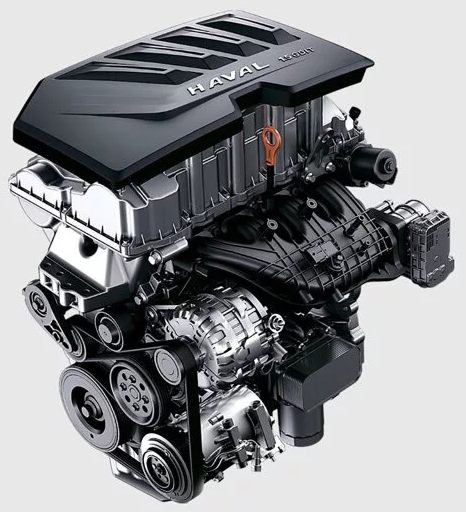
Engineered for contemporary driving demands, the GW4B15 features an all-aluminum construction for both its cylinder block and cylinder head, contributing to reduced weight and improved thermal management. It incorporates gasoline direct injection (GDI) technology, which delivers fuel directly into the combustion chamber for improved combustion efficiency and fuel atomization. Variable Valve Timing (VVT) is utilized on both intake and exhaust camshafts to optimize valve overlap across the engine’s operating range, enhancing torque delivery and fuel economy. A single-scroll turbocharger with an electronic wastegate further boosts performance by maximizing air intake, providing robust power output from low RPMs.
This versatile engine has been widely deployed across Haval’s popular SUV range, serving as a primary powertrain option. Key vehicle models utilizing the GW4B15 include the Haval H6 (second and third generations), Haval F7, Haval Jolion, and Haval Dargo (known as Big Dog in some markets). Depending on the specific vehicle model and market, it is typically paired with either a 7-speed wet dual-clutch transmission (7DCT) or a 6-speed manual transmission, offering various trim levels and powertrain configurations.
Technical Specifications
| Specification | Value |
|---|---|
| Displacement (cc) | 1497 cc |
| Max Power (hp (kW) @ RPM) | 169 hp (124 kW) @ 5000-5600 RPM |
| Max Torque (Nm (kg*m) @ RPM) | 285 Nm (29.1 kg*m) @ 1400-3600 RPM |
| Fuel Type | Gasoline (Unleaded 92 RON minimum) |
| Fuel Consumption (l/100 km) | Refer to specific vehicle homologation (typically 6.8-7.5 l/100 km combined) |
| Engine Type | Inline-4, Turbocharged, DOHC, GDI |
| Compression Ratio | 10.5:1 |
| Cylinder Bore (mm) | 75 mm |
| Piston Stroke (mm) | 84.7 mm |
| Valvetrain | DOHC, VVT on intake and exhaust |
| Valves per Cylinder | 4 |
| Additional Info | Direct Injection, Single-Scroll Turbocharger, Aluminum Block & Head |
Common Problems & Reliability
As a modern gasoline direct injection (GDI) turbocharged engine, the GW4B15 shares some common characteristics and potential issues associated with this engine type. One notable concern is the potential for carbon buildup on the intake valves due to the absence of fuel washing over the valves (a consequence of direct injection). This can lead to reduced airflow, decreased performance, and rough idle over extended mileage if not addressed. Regular inspection and, if necessary, walnut blasting or chemical cleaning are recommended.
Another area for consideration is the turbocharger’s longevity. While generally robust, continuous exposure to high operating temperatures and inadequate oil changes can accelerate wear on turbocharger bearings and seals. Early signs might include excessive oil consumption or noticeable turbo lag. Furthermore, proper maintenance of the engine’s sophisticated GDI system, including fuel injectors and high-pressure fuel pump, is crucial to prevent premature failure. The expected service life for the Haval GW4B15 engine, when subjected to diligent maintenance and responsible driving, is estimated to be around 250,000 to 300,000 kilometers before major overhaul.
Maintenance Tips & Service Schedule
Maintaining the GW4B15 engine properly is critical for ensuring its longevity and optimal performance. Regular oil changes are paramount, with synthetic oil meeting API SN+ or SP specifications, typically a 0W-20 or 5W-30 viscosity, recommended every 7,500 to 10,000 kilometers or every 6-12 months, whichever comes first. Given its GDI nature, more frequent oil changes within this range are advisable to mitigate potential oil dilution and minimize carbon accumulation.
Spark plugs, preferably iridium-tipped for their extended life, should be inspected and replaced every 40,000 to 60,000 kilometers. The engine utilizes a timing chain, which is designed for the life of the engine under normal conditions; however, inspection for excessive slack or noise is recommended around 150,000 kilometers. The cooling system, including coolant flush and replacement, should be serviced every 3-5 years or 60,000-90,000 kilometers. Air filters and fuel filters (if externally serviceable) require periodic inspection and replacement according to the manufacturer’s schedule or environmental conditions. Adherence to these intervals helps preserve engine health and efficiency.
Conclusion
The Haval GW4B15 engine presents itself as a competent and modern powertrain, offering a strong blend of performance and efficiency for its displacement. For a used vehicle buyer, it represents a generally reliable choice, provided that the vehicle has a documented service history demonstrating adherence to manufacturer-recommended maintenance schedules. Potential buyers should prioritize vehicles where regular oil changes, specifically with appropriate synthetic oils, have been performed. While carbon buildup and turbocharger health are common considerations for any GDI turbocharged engine, proactive maintenance significantly mitigates these risks, making the GW4B15 a viable and capable engine for everyday use.