
Overview & Design Features
The GMC LMF is a 5.3-liter, naturally aspirated V8 engine that belongs to the General Motors Generation IV Small-Block engine family. Produced between 2010 and 2014, this specific power plant was engineered primarily for heavy-duty commercial applications where structural durability and consistent low-end torque delivery were prioritized over high-RPM performance. With a total displacement of 5,328 cubic centimeters, the engine represents a highly refined, work-focused evolution of the classic pushrod overhead valve architecture, designed to withstand rigorous daily operation in fleet environments.
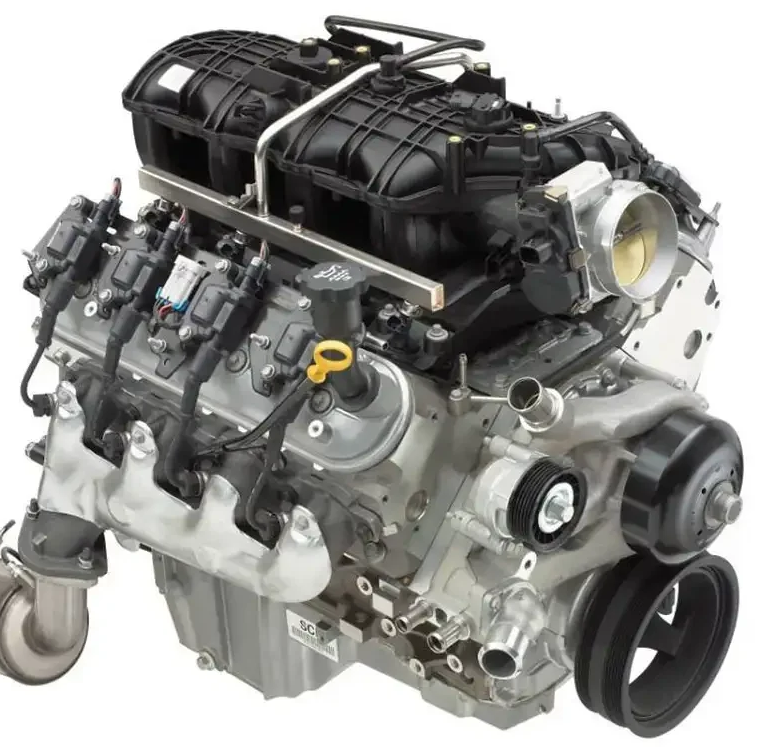
Structurally, the LMF engine features a robust cast iron cylinder block paired with lightweight aluminum cylinder heads, offering an optimal balance of structural rigidity, thermal dissipation, and long-term wear resistance. Fuel delivery is managed via sequential port fuel injection, and the system is fully compatible with E85 flex-fuel. Variable Valve Timing (VVT) is integrated to optimize power output across the rev range. Most notably, the LMF does not utilize Active Fuel Management (AFM) or cylinder deactivation technology. The absence of AFM significantly simplifies the valvetrain, eliminating a common point of mechanical failure associated with other Gen IV engines.
This V8 variant was primarily utilized within General Motors’ full-size utility van platform. The LMF engine was officially deployed in the GMC Savana 1500 and 2500, as well as the Chevrolet Express 1500 and 2500, spanning the 2010 through 2014 model years. It served as a highly dependable workhorse for both cargo and passenger configurations during this period.
Technical Specifications
| Specification | Value |
|---|---|
| Displacement (cc) | 5,328 cc (5.3 Liters) |
| Max Power (hp (kW) @ RPM) | 310 hp (231 kW) @ 5,200 RPM |
| Max Torque (Nm (kg*m) @ RPM) | 453 Nm (46.2 kg*m) @ 4,400 RPM |
| Fuel Type | Regular Unleaded / E85 Flex-Fuel |
| Fuel Consumption (l/100 km) | Approximately 15.7 l/100 km (combined, application-dependent) |
| Engine Type | 90-Degree V8, Gen IV Small-Block |
| Compression Ratio | 9.6:1 |
| Cylinder Bore (mm) | 96.01 mm |
| Piston Stroke (mm) | 92.00 mm |
| Valvetrain | OHV (Overhead Valve), Pushrod, Variable Valve Timing (VVT) |
| Valves per Cylinder | 2 valves per cylinder (16 total) |
| Additional Info | Cast iron block, aluminum heads, non-AFM design |
Common Problems & Reliability
The GMC LMF is widely regarded as one of the most reliable iterations of the Generation IV Small-Block V8. Because the design omits the complex Active Fuel Management (AFM) system, it completely avoids the catastrophic lifter collapses and excessive oil consumption that frequently plagued sister engines like the LC9 and LMG. However, the engine is not entirely free of minor engineering flaws. The most common mechanical issue involves the exhaust manifold bolts, which are prone to shearing off over time due to thermal expansion cycles, leading to noticeable exhaust leaks and ticking sounds upon cold starts.
Additionally, while the Variable Valve Timing (VVT) system is generally robust, it is highly sensitive to oil quality and pressure. Neglected maintenance can cause oil sludge to block the VVT actuator screen, leading to rough idling or camshaft timing codes. Despite these minor vulnerabilities, the cast iron cylinder block ensures exceptional structural durability. Under proper care, a realistic expected service life for the LMF engine easily exceeds 300,000 miles (482,000 km) before requiring a major overhaul.
Maintenance Tips & Service Schedule
Preserving the performance and longevity of the LMF engine requires strict adherence to preventative maintenance protocols. The following guidelines outline the recommended service intervals:
- Engine Oil: Use high-quality 5W-30 synthetic oil. Oil changes should be performed every 5,000 to 7,500 miles (8,000 to 12,000 km) to maintain system cleanliness and prevent VVT actuator blockages.
- Spark Plugs: Replace the factory-spec iridium spark plugs and ignition wires every 100,000 miles (160,000 km) to prevent misfires and maintain optimal fuel efficiency.
- Cooling System: Perform a complete system flush and replace the Dex-Cool coolant every 5 years or 150,000 miles (240,000 km) to prevent corrosion within the aluminum cylinder heads.
- Exhaust Manifold Hardware: Periodically inspect the exhaust manifold bolts for breakage, especially if a ticking noise develops during cold engine operation.
Conclusion
In the market for used utility vehicles, the GMC LMF stands out as an exceptionally safe and reliable engine choice. By combining the legendary durability of a cast iron block with a simplified, non-AFM pushrod valvetrain, this engine delivers consistent performance with minimal maintenance overhead. For buyers seeking a pre-owned commercial or passenger van, vehicles equipped with the LMF V8 represent some of the most dependable options available, offering outstanding longevity and a low cost of ownership.