
The company has been producing the 1.2-liter Peugeot EB2DT or HNZ turbo engine since 2014, and it is currently gradually being replaced by the EB2ADTD engine on models with the PureTech 110 index. Such a power unit has several modifications, including EB2ADT and EB2DTM.
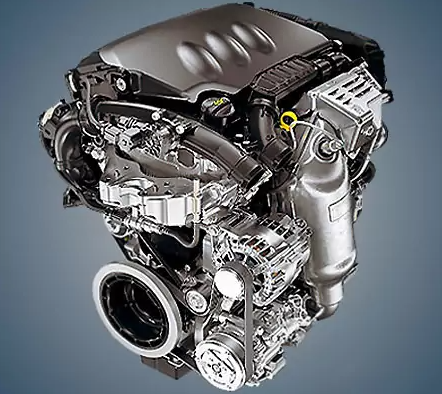
The EB family of engines includes EB0, EB2, EB2M, EB2DT, EB2DTS, and EB2ADTX.
Specifications
| Production years | since 2014 |
| Displacement, cc | 1199 |
| Fuel system | direct injection |
| Power output, hp | 110 |
| Torque output, Nm | 205 |
| Cylinder block | aluminum R3 |
| Block head | aluminum 12v |
| Cylinder bore, mm | 75 |
| Piston stroke, mm | 90.5 |
| Compression ratio | 10.5 |
| Features | balancers |
| Hydraulic lifters | no |
| Timing drive | belt |
| Phase regulator | dual VTi |
| Turbocharging | Garrett NGT1341LSZ |
| Recommended engine oil | 0W-30 |
| Engine oil capacity, liter | 3.5 |
| Fuel type | petrol |
| Euro standards | EURO 5/6 |
| Fuel consumption, L/100 km (for Peugeot 208 2015) — city — highway — combined |
5.6 3.8 4.5 |
| Engine lifespan, km | ~270 000 |
| Weight, kg | 98 |
The engine was installed on:
- Citroen Berlingo II (B9) in 2016 – 2018; Berlingo III (K9) in 2018 – 2019;
- Citroen C3 II (A51) in 2014 – 2017; C3 III (B61) since 2017;
- Citroen C3 Aircross II (A88) since 2017;
- Citroen C3 Picasso I (A58) in 2015 – 2017;
- Citroen C4 II (B71) in 2015 – 2018;
- Citroen C4 Picasso II (B78) in 2016 – 2018;
- Citroen C4 Cactus I (E3) in 2014 – 2018; C4 Cactus II (F3) in 2018 – 2020;
- Citroen DS3 I (A55) in 2014 – 2016;
- DS DS3 I (A55) in 2016 – 2019;
- Opel Combo E (X19) in 2018 – 2019;
- Opel Crossland X (P17) since 2017;
- Peugeot 208 I (A9) in 2015 – 2019;
- Peugeot 2008 I (A94) in 2015 – 2019;
- Peugeot 308 II (T9) in 2014 – 2021; 308 III (P5) since 2021;
- Peugeot Partner II (B9) in 2016 – 2018;
- Peugeot Rifter I (K9) in 2018 – 2019.
Disadvantages of the EB2DT engine
Due to crankshaft axial play, motors from the first years of production were recalled; direct injection nozzles cause carbon deposits to form on the valves;
Additionally, units of this family typically use oil after 100,000 kilometers of operation; however, the timing belt in an oil bath is the primary design error here; he does not travel the recommended 180,000 kilometers, and the wear products clog the oil channels.