
Produced between 1992 and 1998, the 2.0-liter 8-valve Peugeot XU10J2, also known as the RFU engine, was fitted to several mass models of the company at the time, including the 306, 405, 605, and 806. There was also a 147-horsepower turbo version of the power unit with the XU10J2TE or RGX index.
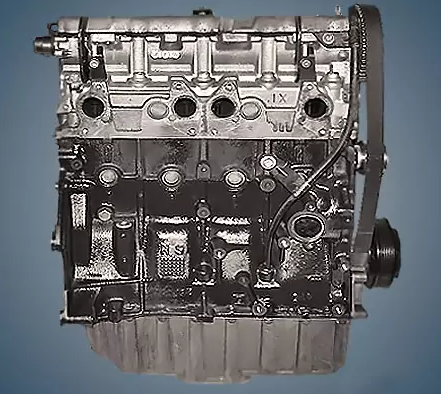
The XU family of engines includes the XU5JP, XU7JB, XU7JP, XU7JP4, XU10J2, and XU10J4R.
Specifications
| Production years | 1992-1998 |
| Displacement, cc | 1998 |
| Fuel system | injector |
| Power output, hp | 121 |
| Torque output, Nm | 170 |
| Cylinder block | cast iron R4 |
| Block head | aluminum 8v |
| Cylinder bore, mm | 86 |
| Piston stroke, mm | 86 |
| Compression ratio | 9.5 |
| Features | no |
| Hydraulic lifters | no |
| Timing drive | belt |
| Phase regulator | no |
| Turbocharging | no |
| Recommended engine oil | 5W-40 |
| Engine oil capacity, liter | 4.25 |
| Fuel type | petrol |
| Euro standards | EURO 1/2 |
| Fuel consumption, L/100 km (for Peugeot 605 1993) — city — highway — combined |
12.8 6.8 9.5 |
| Engine lifespan, km | ~280 000 |
| Weight, kg | 135 |
The engine was installed on:
- Citroen Xantia in 1992 – 1997;
- Citroen ZX in 1993 – 1998;
- Peugeot 306 I (N3/N5) in 1993 – 1997;
- Peugeot 405 I (D6/D7) in 1992 – 1997;
- Peugeot 605 I (Y30) in 1993 – 1995;
- Peugeot 806 I (U60) in 1994 – 1998.
Disadvantages of the XU10J2 engine
Candles and ignition coils quickly deteriorate due to poor fuel; the idle speed controller is typically the cause of the floating engine speed;
Keep an eye on the timing belt’s condition; if it is declared to be 120,000 km, it might not pass;
Regular oil leaks occur from beneath the crankshaft oil seal and valve cover;
It is challenging to find a replacement for the plastic intake manifold, which frequently cracks;
Unstable operation in frost and freezing crankcase ventilation is discussed on specialized forums; you will need to adjust the valves because there are no hydraulic lifters.