
In 1994, the well-liked M50B20 engine was replaced by the M52B20. This is the first engine in the new M52 family of inline 6-cylinder engines, which also includes the M52B24, M52B25, M52B28, and S52B32. The new engine’s lightweight aluminum cylinder block has new pistons, connecting rods, and nickel-plated cylinders.
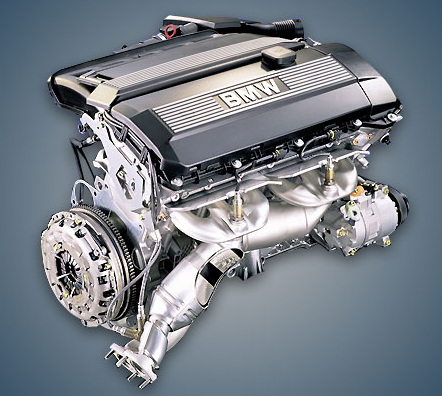
The M52B20 connecting rod is 145 mm long, and the piston’s compression height is 31.64 mm. Additionally, a new intake was utilized; the M50B20TU’s cylinder head was removed. M52B20 injectors: 154 cc.
The engine M52TUB20 received a new cylinder head with double vanos on both shafts following a technical update in 1998. The camshafts themselves are now 244/228 lift 9. Cylinder block cast-iron liners, connecting rods, pistons, a modified cooling system, an electronic throttle valve, a system DISA geometry modification for the intake manifold, and more were added.
BMW vehicles with an index of 20i used this motor.
Specifications
| Production years | 1994-2001 Munich Plant |
| Displacement, cc | 1991 |
| Fuel system | injector |
| Power output, hp | 150 |
| Torque output, Nm | 190 |
| Cylinder block | aluminum R6 |
| Block head | aluminum 24v |
| Cylinder bore, mm | 80 |
| Piston stroke, mm | 66 |
| Compression ratio | 11.0 |
| Features | no |
| Hydraulic lifters | yes |
| Timing drive | chain |
| Phase regulator | single VANOS (M52B20) double VANOS (M52B20TU) |
| Turbocharging | no |
| Recommended engine oil | 5W-30 |
| Engine oil capacity, liter | 6.5 |
| Fuel type | petrol |
| Euro standards | EURO 2 (M52B20) EURO 3 (M52B20TU) |
| Fuel consumption, L/100 km (for E46 320i) — city — highway — combined |
12.5 6.8 8.9 |
| Engine lifespan, km | ~350 000 |
| Weight, kg | ~165 ~175 (TU) |
Disadvantages of the M52B20 engine
Overheating is a characteristic of the M52B20 engine that may cause cylinder head issues. Examine the radiator’s condition if the motor is hot; it might require cleaning. Additionally, it aids in removing air pockets by blowing through the cooling system. Examine the radiator cap, pump, and thermostat.
The state of the cylinder walls and piston rings is examined when oil consumption is high. Replacing the rings is often enough. A nikasil motor liner is necessary if the cylinder walls are worn. Verify the crankcase ventilation valve as well.
The hydraulic lifters that have become cocked must be replaced if there are misfires in the ignition. Check to see if the Vanos is worn out when the engine rumbles, stalls, rpm floats, and power drops. A repair kit is used to make repairs.
Examine the state of the oil pump and cup if the oil light is always on. Position sensors for the crankshaft and camshaft may malfunction. A leaky thermostat and an unreliable thread beneath the cylinder head bolts are two of the issues.