
From 1999 until 2011, the Japanese plant produced the 1.8-liter Toyota 2ZZ-GE engine for both Lotus brand sports cars and sports versions of popular civilian models. The motor has a VVTL-i phase control system and was designed in collaboration with Yamaha engineers.
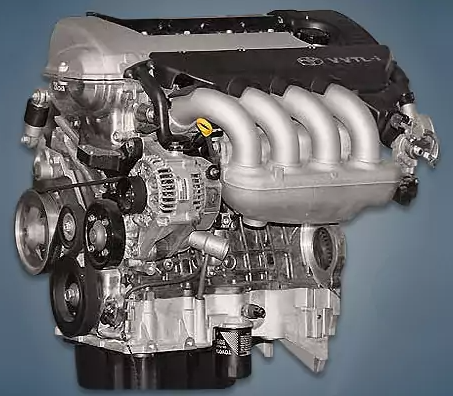
The engines in the ZZ family are 1ZZ-FE, 1ZZ-FED, 2ZZ-GE, 3ZZ-FE, and 4ZZ-FE.
Specifications
| Production years | 1999-2011 |
| Displacement, cc | 1796 |
| Fuel system | MPI injector |
| Power output, hp | 164 – 190 (atmospheric version) 220 – 260 (supercharged version) |
| Torque output, Nm | 170 – 180 (atmospheric version) 215 – 235 (supercharged version) |
| Cylinder block | aluminum R4 |
| Block head | aluminum 16v |
| Cylinder bore, mm | 82 |
| Piston stroke, mm | 85 |
| Compression ratio | 11.5 |
| Features | no |
| Hydraulic lifters | no |
| Timing drive | chain |
| Phase regulator | VVT-i (atmospheric version) VVTL-i (supercharged version) |
| Turbocharging | no (atmospheric version) compressor (supercharged version) |
| Recommended engine oil | 5W-30 |
| Engine oil capacity, liter | 4.4 |
| Fuel type | petrol |
| Euro standards | EURO 3/4 |
| Fuel consumption, L/100 km (for Toyota Celica 2002) — city — highway — combined |
11.5 6.6 8.4 |
| Engine lifespan, km | ~200 000 |
| Weight, kg | 135 |
2ZZ-GE was installed on cars:
- Toyota Celica SS-II (Japan, 187 hp);
- Toyota Celica GT-S (USA, 180 hp);
- Toyota Celica 190/T-Sport (UK, 189 hp);
- Toyota Corolla Sportivo (Australia, 189 hp/180 Nm);
- Toyota Corolla TS (Europe, 189 hp);
- Toyota Corolla Compressor (Europe, turbocharged, 222 hp);
- Toyota Corolla XRS (USA, 164/170 hp);
- Toyota Corolla Fielder Z Aero Tourer (Japan, 196 hp);
- Toyota Corolla Runx Z Aero Tourer (Japan, 187 hp);
- Toyota Corolla RunX RSi (South Africa, 141 kW/180 Nm);
- Toyota Matrix XRS (USA, 164-180 hp);
- Pontiac Vibe GT (USA, 164-180 hp);
- WiLL VS 1.8;
- Lotus Elise (North America/UK, 190 hp);
- Lotus Exige (US/UK, 190hp NA and 243hp turbocharged);
- Lotus 2-Eleven (US/UK, turbocharged, 252 hp).
Frequent problems
Oil burns. When 2ZZ reaches the 150,000-kilometer mark, the most frequent issue arises. Decarbonization provides short-term benefits. It is therefore impossible to avoid a significant overhaul or motor replacement.
Inside the motor, there are knocks and noises. A loose timing chain is the primary cause. Replacement is necessary.
Revolutions are unstable. Cleaning the valves at idle speed is essential. Additionally, the throttle-valve module may be the cause; diagnostics are necessary.
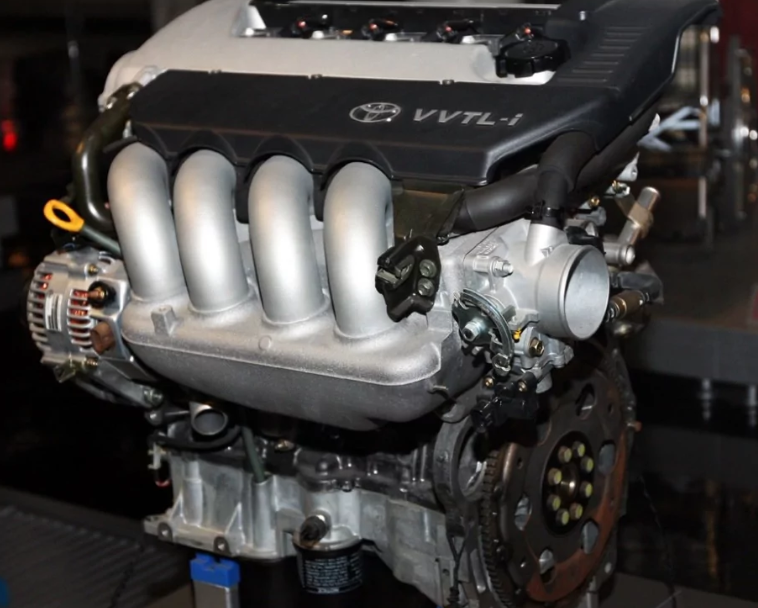
The list of issues is expanded to include the VVTL-i-system’ssporadicwhims. As a preventative measure, the lift bolts must be changed after 50,000 kilometers of track. Failure to do so could result in a system failure and a power drop of more than 6,000 rpm. The motor’s lifespan is limited to 200,000 kilometers, or the same indicator 1ZZ. As an alternative, 3S-GTE can be used in its place.
The extremely tiny jumper between the cylinders continues to be the primary structural issue with the 2ZZ GE motor:
- Shells and cavities may form during the cooling of the aluminum cast block with a probability of over 75%;
- aluminosilicate inclusions cool at a different rate, causing microcracks to form close to them;
- and a porous structure may form during the curing process, once more because of aluminosilicate foreign inclusions.
An internal combustion engine of this type is initially vulnerable to liner scuffing. Unlike a similar coating of a steel or aluminum sleeve, the mesh of the hone (a unique coating of the inner wall of the sleeve) is wrinkled. Although the manufacturer stated that the sleeves’ resources were adequate, this was not actually guaranteed.
Since the piston is made with a similar technology, all of the aforementioned statements apply to it. Applying coatings containing iron and phosphorus increases the piston skirt’s hardness.
Through extensive testing, the manufacturer was able to slightly improve the cylinder-piston group’s maintainability by causing wear on the piston rings rather than the liners in this friction pair.