
In 2016, the company unveiled the Hyundai G4LD or 1.4 T-GDI, a 1.4-liter turbocharged engine. This motor, which goes by the G1.4T index, has been a part of the new Smartstream line since 2019.
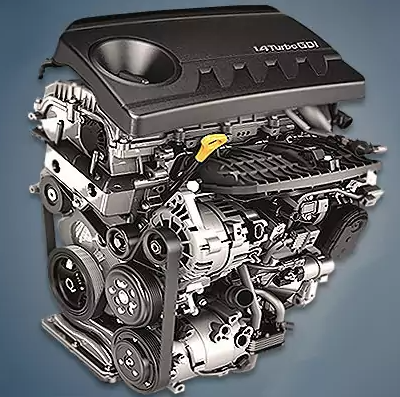
G4LA, G4LF, G4LC, G4LD, G4LG, G4LH, and G4LE are members of the Kappa R4 family.
The Elantra model for the US market debuted a 1.4-liter turbocharged engine in 2016. When the engine arrived in Europe, its 130 horsepower was increased to 140 horsepower. An aluminum block, cast iron sleeves, an aluminum 16-valve cylinder head with hydraulic lifters and a direct fuel injection system, a timing chain drive, and a dual CVVT phase control system on two camshafts characterize this typical Kappa power unit. Supercharging is done by the Hyundai Wia’s in-house turbine with article 28231-03200.
Scuffing is hardly ever seen here because the manufacturer changed the exhaust manifold’s design and originally fitted the engine with oil nozzles to cool the pistons.
The engine was mounted on:
- Hyundai i30 3 (PD) since 2017;
- Hyundai Creta 2 (SU2) since 2020;
- Hyundai Elantra 6 (AD) in 2016 – 2020;
- Hyundai Veloster 2 (JS) since 2018;
- Kia Ceed 3 (CD) since 2018;
- Kia ProCeed 3 (CD) since 2019;
- Kia XCeed 1 (CD) since 2019.
Specifications
| Production years | since 2016 |
| Displacement, cc | 1353 |
| Fuel system | direct injection |
| Power output, hp | 130 – 140 |
| Torque output, Nm | 212 – 242 |
| Cylinder block | aluminum R4 |
| Block head | aluminum 16v |
| Cylinder bore, mm | 71.6 |
| Piston stroke, mm | 84 |
| Compression ratio | 10.0 |
| Hydraulic lifters | yes |
| Timing drive | chain |
| Phase regulator | Dual CVVT |
| Turbocharging | Hyundai Wia |
| Recommended engine oil | 0W-30, 5W-30 |
| Engine oil capacity, liter | 4.5 |
| Fuel type | petrol |
| Euro standards | EURO 5/6 |
| Fuel consumption, L/100 km (for Kia Ceed 2019) — city — highway — combined |
7.7 5.2 6.1 |
| Engine lifespan, km | ~250 000 |
| Weight, kg | 92 (without attachments) |
Disadvantages of the Hyundai G4LD engine
The ellipse of the cylinders is the primary cause of the appearance of a progressive oil burner since there are piston cooling nozzles and the scuffing issue is not severe. The turbocharger only speeds up the deformation processes, and the aluminum block with its thin cast-iron sleeves and open cooling jacket has low rigidity.
The dependable bush-roller chain used in the Korean company’s turbine units can extend up to 100,000 kilometers if the engine is frequently cut off. The fact that each service replaces the chain at a reasonable cost is a good thing.
This engine has carbon buildup on the intake valves, just like any other direct injection engine. Weak gaskets are another common cause of coolant and oil leaks.