
From 2008 to 2014, the 1.4-liter Volkswagen CGGA 1.4 MPi gasoline engine was put into popular models like the Golf 6, including the Plus version, and the Skoda Octavia 2. In actuality, this engine was one of the last naturally aspirated engines in its class.
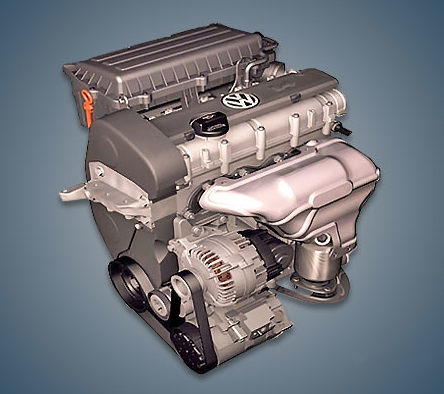
AEX, AKQ, AXP, BBY, BCA, BUD, CGGA, and CGGB are all part of the EA111-1.4 series.
Specifications
| Production years | 2008-2014 |
| Displacement, cc | 1390 |
| Fuel system | injector |
| Power output, hp | 80 |
| Torque output, Nm | 132 |
| Cylinder block | aluminum R4 |
| Block head | aluminum 16v |
| Cylinder bore, mm | 76.5 |
| Piston stroke, mm | 75.6 |
| Compression ratio | 10.5 |
| Features | DOHC |
| Hydraulic lifters | yes |
| Timing drive | 2 belts |
| Phase regulator | no |
| Turbocharging | no |
| Recommended engine oil | 5W-30 |
| Engine oil capacity, liter | 3.2 |
| Fuel type | petrol |
| Euro standards | EURO 5 |
| Fuel consumption, L/100 km (for VW Golf 2010) — city — highway — combined |
8.5 5.1 6.4 |
| Engine lifespan, km | ~260 000 |
The engine was installed on:
- Volkswagen Golf 6 (5K) in 2008 – 2013;
- Volkswagen Golf Plus 1 (5M) in 2009 – 2014;
- Skoda Octavia 2 (1Z) in 2010 – 2013.
Disadvantages of the VW CGGA engine
This engine is thought to be more dependable than its turbocharged counterparts.
Here, the throttle and EGR valve are frequently dirty, and ignition coils are not very useful.
Hydraulic lifters knock because of wear on the oil pump and a clogged oil receiver.
The valves will bend if you neglect to replace either of the two timing belts.
During the initial years of production, the exhaust manifold was frequently replaced under warranty.