
The fourth generation of the Golf model and comparable Bora, Toledo, and Leon models were equipped with the 1.6-liter 16-valve Volkswagen AUS engine, which was manufactured between 2000 and 2005. Additionally, under its own ATN index, this power unit had an EURO 3 modification.
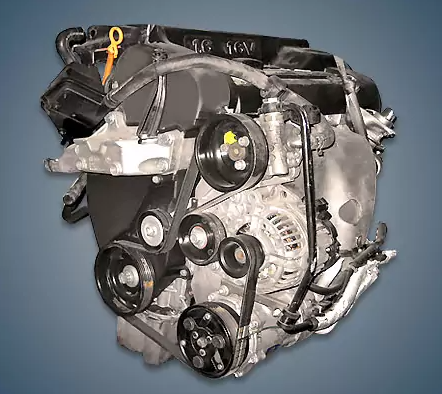
ABU, AEE, AUS, AZD, BCB, BTS, CFNA, and CFNB are all part of the EA111-1.6 series.
Specifications
| Production years | 2000-2005 |
| Displacement, cc | 1598 |
| Fuel system | injector |
| Power output, hp | 105 |
| Torque output, Nm | 148 |
| Cylinder block | cast iron R4 |
| Block head | aluminum 16v |
| Cylinder bore, mm | 76.5 |
| Piston stroke, mm | 86.9 |
| Compression ratio | 11.5 |
| Features | DOHC |
| Hydraulic lifters | yes |
| Timing drive | belt |
| Phase regulator | no |
| Turbocharging | no |
| Recommended engine oil | 5W-30 |
| Engine oil capacity, liter | 4.5 |
| Fuel type | petrol |
| Euro standards | EURO 4 |
| Fuel consumption, L/100 km (for VW Golf 4 2001) — city — highway — combined |
9.5 5.6 7.0 |
| Engine lifespan, km | ~300 000 |
The engine was installed on:
- Volkswagen Bora 1 (1J) in 2000 – 2005;
- Volkswagen Golf 4 (1J) in 2000 – 2003;
- Seat Leon 1 (1M) in 2000 – 2005;
- Seat Toledo 2 (1M) in 2000 – 2004.
Disadvantages of the VW AUS engine
The most common cause of floating engine speeds is throttle assembly contamination.
Here, antifreeze leaks from the cooling system’s plastic tubes and thermostat are not unusual.
The intake valves are always bent when the timing belts break, so keep an eye on their condition.
Oil burn frequently starts at high mileage as a result of ring or cap wear.