
The most potent Passat and Passat CC models, including those with all-wheel drive, were equipped with the 3.6-liter VR6 Volkswagen BWS engine, which was manufactured in Germany between 2008 and 2015. The unit’s intake and exhaust manifolds set it apart from its predecessor under the BLV index.
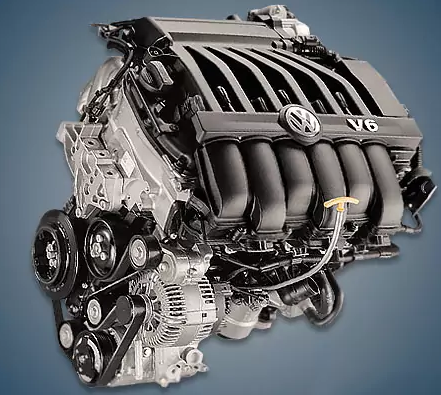
AXZ, BHK, BWS, CDVC, CMTA, and CMVA are all part of the EA390 series.
Specifications
| Production years | 2008-2015 |
| Displacement, cc | 3597 |
| Fuel system | direct injection |
| Power output, hp | 300 |
| Torque output, Nm | 350 |
| Cylinder block | cast iron VR6 |
| Block head | aluminum 24v |
| Cylinder bore, mm | 89 |
| Piston stroke, mm | 96.4 |
| Compression ratio | 11.4 |
| Features | no |
| Hydraulic lifters | yes |
| Timing drive | chain |
| Phase regulator | on two shafts |
| Turbocharging | no |
| Recommended engine oil | 5W-30 |
| Engine oil capacity, liter | 6.7 |
| Fuel type | petrol |
| Euro standards | EURO 5 |
| Fuel consumption, L/100 km (for VW Passat CC 2014) — city — highway — combined |
12.4 7.4 9.3 |
| Engine lifespan, km | ~300 000 |
| Weight, kg | 188 |
The engine was installed on:
- Volkswagen Passat B6 (3C) in 2008 – 2010; Passat B7 (36) in 2010 – 2014;
- Volkswagen Passat CC (35) in 2008 – 2015.
Disadvantages of the VW BWS engine
Although this unit has a lot of resources and is very dependable, its fuel consumption is excessive.
It might not start well in the winter because the exhaust system’s condensate freezes.
It has carbon buildup on the intake valves, just like all direct injection engines.
Regulator failure can occasionally result in a sudden spike in pressure and injection pump leakage.
The membrane of the crankcase ventilation system is another one of this motor’s weak points.