
From 1994 to 2000, the company produced the 1.8-liter Audi 1.8 ADR gasoline engine, which was fitted to the company’s most well-liked models, the A4, A6, and fifth generation Passat. According to the ARG index, this power unit actually did not differ significantly from its half-brother.
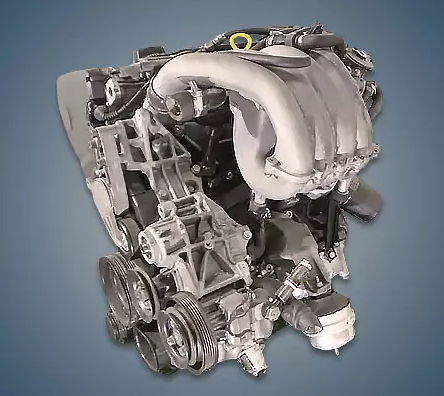
The EA827 1.8l series includes: RP, AAM, ABS, ADZ, PF, ADR, ARG, AEB, ANB.
Specifications
| Production years | 1994-2000 |
| Displacement, cc | 1781 |
| Fuel system | injector |
| Power output, hp | 125 |
| Torque output, Nm | 168 |
| Cylinder block | cast iron R4 |
| Block head | aluminum 20v |
| Cylinder bore, mm | 81 |
| Piston stroke, mm | 86.4 |
| Compression ratio | 10.3 |
| Features | DOHC |
| Hydraulic lifters | yes |
| Timing drive | chain & belt |
| Phase regulator | yes |
| Turbocharging | no |
| Recommended engine oil | 5W-30 |
| Engine oil capacity, liter | 4.5 |
| Fuel type | petrol |
| Euro standards | EURO 3 |
| Fuel consumption, L/100 km (for Audi A4 1996) — city — highway — combined |
12.1 6.5 8.6 |
| Engine lifespan, km | ~330 000 |
The engine was installed on:
- Audi A4 B5 (8D) in 1994 – 1998;
- Audi A6 C4 (4A) in 1995 – 1997;
- Volkswagen Passat B5 (3B) in 1996 – 2000.
Disadvantages of the Audi ADR engine
The chain tensioner, which doubles as a phase regulator, is the source of most issues.
Additionally, keep an eye on the timing belt’s condition because the valves always bend when it breaks.
The oil separator gasket tans in frost, and the crankcase ventilation is frequently clogged.
A dirty throttle or intake flaps are typically the cause of engine thrust failures.
Here, there is little resource available for the viscous coupling of the fan, pump, and flow meter.