
From 1964 until 2011, the Ford Cologne V6 engine series was manufactured at a plant in Cologne and fitted to numerous well-known models of the American company, which is best known for the Explorer. Traditionally, these power units are classified into three generations: OHV for the first two and SOHC for the third.
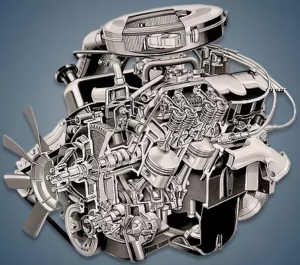
The first generation of V6 engines was introduced by Ford’s German division in 1964. These are standard OHV engines by design, featuring a cast iron block with a 60° cylinder angle, two cast iron 6-valve cylinder heads without hydraulic compensators, and a gear timing drive. Initially, 2.0-liter carburetor power units with 85 or 90 horsepower were introduced, but new engines with 1.8 and 2.3 liters of 82 and 108 horsepower were added to the series in 1967. The largest and most potent 2.6-liter engine with 125 horsepower and 205 Nm made its debut in 1969. It served as the foundation for the development of a 150 horsepower injection engine that was unprecedented at the time.
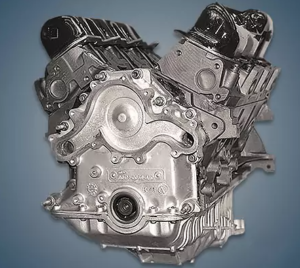
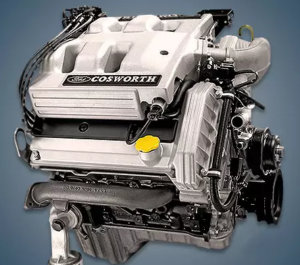
The third generation SOHC V6 with overhead camshafts made its debut in 1997. These engines had an intermediate shaft, a variable-length intake manifold, EFI electronic injection, 210 horsepower, and a complicated and unreliable three-chain timing system.
We also mention the 24-valve DOHC modification 2.9 Cosworth, which was installed on the Ford Scorpio from 1991 to 1998 and produced 195 horsepower in the model’s first generation and 207 horsepower in its second.
Modifications of Ford Cologne V6 engines of the 1st generation
Specifications of the 1.8-liter OHV version
| Type | V-shaped |
| Displacement, cc | 1812 |
| Fuel system | carburetor |
| Power output, hp | 82 |
| Torque output, Nm | 135 |
| Number of cylinders | 6 |
| Number of valves | 12 |
| Cylinder bore, mm | 80 |
| Piston stroke, mm | 60.14 |
| Compression ratio | 8.75 |
| Euro standards | EURO 0 |
Specifications of the 2.0-liter OHV version
| Type | V-shaped |
| Displacement, cc | 1998 |
| Fuel system | carburetor |
| Power output, hp | 85 – 90 |
| Torque output, Nm | 151 – 158 |
| Number of cylinders | 6 |
| Number of valves | 12 |
| Cylinder bore, mm | 84 |
| Piston stroke, mm | 60.14 |
| Compression ratio | 8.75 |
| Euro standards | EURO 0 |
Specifications of the 2.3-liter OHV version
| Type | V-shaped |
| Displacement, cc | 2293 |
| Fuel system | carburetor |
| Power output, hp | 108 – 114 |
| Torque output, Nm | 176 |
| Number of cylinders | 6 |
| Number of valves | 12 |
| Cylinder bore, mm | 90 |
| Piston stroke, mm | 60.14 |
| Compression ratio | 8.75 |
| Euro standards | EURO 0 |
Specifications of the 2.6-liter OHV version
| Type | V-shaped |
| Displacement, cc | 2550 |
| Fuel system | carburetor |
| Power output, hp | 125 |
| Torque output, Nm | 205 |
| Number of cylinders | 6 |
| Number of valves | 12 |
| Cylinder bore, mm | 90 |
| Piston stroke, mm | 66.8 |
| Compression ratio | 8.75 |
| Euro standards | EURO 0 |
Modifications of Ford Cologne V6 engines of the 2st generation
Specifications of the 2.4-liter OHV version
| Type | V-shaped |
| Displacement, cc | 2394 |
| Fuel system | L-Jetronic |
| Power output, hp | 125 – 130 |
| Torque output, Nm | 182 – 193 |
| Number of cylinders | 6 |
| Number of valves | 12 |
| Cylinder bore, mm | 84 |
| Piston stroke, mm | 72 |
| Compression ratio | 8.75 – 9.20 |
| Euro standards | EURO 0 |
Specifications of the 2.8-liter OHV version
| Type | V-shaped |
| Displacement, cc | 2792 |
| Fuel system | carburetor / K-Jetronic |
| Power output, hp | 135 – 160 |
| Torque output, Nm | 208 – 221 |
| Number of cylinders | 6 |
| Number of valves | 12 |
| Cylinder bore, mm | 93.03 |
| Piston stroke, mm | 68.50 |
| Compression ratio | 8.75 – 9.20 |
| Euro standards | EURO 0 |
Specifications of the 2.9-liter OHV version
| Type | V-shaped |
| Displacement, cc | 2935 |
| Fuel system | L-Jetronic |
| Power output, hp | 140 – 160 |
| Torque output, Nm | 220 – 230 |
| Number of cylinders | 6 |
| Number of valves | 12 |
| Cylinder bore, mm | 93 |
| Piston stroke, mm | 72 |
| Compression ratio | 9.0 |
| Euro standards | EURO 1 |
Specifications of the 4.0-liter OHV version
| Type | V-shaped |
| Displacement, cc | 3958 |
| Fuel system | L-Jetronic |
| Power output, hp | 155 – 165 |
| Torque output, Nm | 300 – 315 |
| Number of cylinders | 6 |
| Number of valves | 12 |
| Cylinder bore, mm | 100 |
| Piston stroke, mm | 84 |
| Compression ratio | 9.0 |
| Euro standards | EURO 1 |
Modifications of Ford Cologne V6 engines of the 3rd generation
Specifications of the 4.0-liter SOHC version
| Type | V-shaped |
| Displacement, cc | 3996 |
| Fuel system | distributed injection |
| Power output, hp | 205 – 220 |
| Torque output, Nm | 318 – 349 |
| Number of cylinders | 6 |
| Number of valves | 12 |
| Cylinder bore, mm | 100.3 |
| Piston stroke, mm | 84.3 |
| Compression ratio | 9.7 |
| Euro standards | EURO 1/2 |
Cologne V6 series engines weigh between 200 and 220 kg when assembled.
Disadvantages of the Ford Cologne V6
Problems with valve guide wear started as soon as the engines in this line received aluminum cylinder heads, and by 200,000 kilometers, the play is typically very large. Additionally, you must be able to drill the guides because they are cast with the head.
A dependable gear or chain timing system is present in the first two generations of OHV engines. Additionally, weak tensioners and crumbling plastic guides provided a very short-lived three-chain drive for power units of the SOHC type.
High mileage can also result in sensor failures, EGR tube cracking, crankshaft damper destruction, and lubricant leaks along the rear oil seal. Furthermore, poor-quality oil can cause hydraulic compensators to jam.