
Overview & Design Features
The Haval GW4C20T is a prominent turbocharged, direct-injection four-cylinder gasoline engine developed by Great Wall Motor (GWM) for its Haval SUV and premium WEY sub-brands. Introduced as a flagship powertrain, this engine represents GWM’s commitment to advanced engine technology, offering a balance of performance and efficiency. With a displacement of approximately 2.0 liters, the GW4C20T has been a cornerstone in Haval’s modern vehicle lineup, playing a significant role in the brand’s growth and competitive positioning in various global markets.
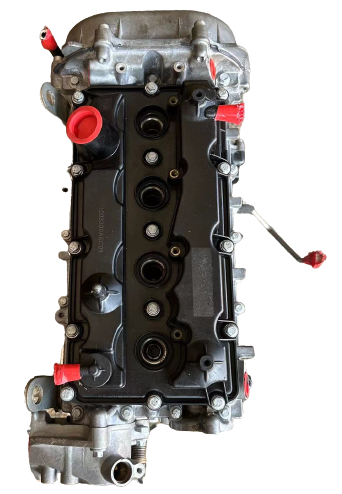
Engineered for contemporary performance, the GW4C20T features an aluminum alloy cylinder block and cylinder head, contributing to reduced overall engine weight and improved thermal management. It incorporates sophisticated technologies such as gasoline direct injection (GDI) for precise fuel delivery and enhanced combustion efficiency. The valvetrain utilizes a Double Overhead Camshaft (DOHC) design complemented by Variable Valve Timing (VVT) on both intake and exhaust camshafts, optimizing valve overlap and lift for a broad torque band and improved fuel economy across the RPM range. Forced induction is provided by a single twin-scroll turbocharger, which minimizes turbo lag and delivers robust power output.
This engine variant has been widely adopted across a range of Haval’s popular SUV models and select WEY vehicles. Key deployments include the Haval H6 (second and third generation), Haval H7, Haval H9, Haval F7, and Haval F7x. It also powered models such as the WEY VV5 and WEY VV7. Production years span from the mid-2010s to the present, with various tunes and updates implemented over its lifecycle to comply with evolving emissions standards and meet specific vehicle performance requirements.
Technical Specifications
| Specification | Value |
|---|---|
| Displacement (cc) | 1967 |
| Max Power (hp (kW) @ RPM) | 197 hp (145 kW) @ 5500 RPM |
| Max Torque (Nm (kg*m) @ RPM) | 345 Nm @ 2000-3200 RPM |
| Fuel Type | Gasoline (minimum RON 92/95 recommended) |
| Fuel Consumption (l/100 km) | Refer to specific vehicle model’s technical documentation |
| Engine Type | Inline-4, Turbocharged, Direct Injection |
| Compression Ratio | 9.6:1 |
| Cylinder Bore (mm) | 82.5 |
| Piston Stroke (mm) | 92.0 |
| Valvetrain | DOHC, 16-valve, Dual VVT |
| Valves per Cylinder | 4 |
| Additional Info | Aluminum alloy block and head, Twin-scroll turbocharger |
Common Problems & Reliability
The Haval GW4C20T engine generally exhibits reasonable reliability for a modern turbocharged unit, but like many direct-injection engines, it is susceptible to certain issues. One common concern is carbon buildup on intake valves. Due to the direct injection system, fuel does not wash over the intake valves, leading to carbon deposits from oil vapor and exhaust gas recirculation (EGR). This can manifest as rough idling, misfires, reduced power, and decreased fuel efficiency, typically after 80,000-100,000 kilometers. Regular intake valve cleaning (walnut blasting) is often required.
Another potential weak point involves the turbocharger assembly. While generally robust, some instances of turbocharger failure have been reported, particularly in vehicles subjected to aggressive driving styles or inconsistent oil change intervals. Symptoms include excessive smoke from the exhaust, unusual noises, or a significant loss of power. The VVT actuators and associated solenoids can also be prone to wear or clogging over extended mileage, leading to timing chain rattle or check engine light illumination. Under proper and consistent maintenance, the GW4C20T engine can realistically achieve a service life of 200,000 to 250,000 kilometers before requiring major overhauls.
Maintenance Tips & Service Schedule
To ensure optimal longevity and performance of the Haval GW4C20T engine, strict adherence to a proactive maintenance schedule is crucial. Engine oil and filter changes are recommended every 7,500 to 10,000 kilometers or every 6-12 months, whichever comes first, using a high-quality synthetic oil conforming to API SN/SP or ACEA A3/B4 standards, with a viscosity such as 5W-30 or 5W-40. Refer to the owner’s manual for specific viscosity recommendations tailored to local climate conditions.
Spark plugs should be inspected and replaced every 30,000 to 45,000 kilometers, utilizing original equipment manufacturer (OEM) or equivalent iridium-tipped plugs. The engine features a timing chain system, which typically does not require scheduled replacement but should be inspected for wear or excessive slack at higher mileages (e.g., 150,000 km). The coolant should be flushed and replaced every 2-4 years or 60,000-80,000 kilometers using an OAT (Organic Acid Technology) type coolant. Air filter and cabin filter replacements are recommended annually or every 20,000 kilometers. Regular inspection of the serpentine belt, hoses, and general fluid levels is also essential.
Conclusion
The Haval GW4C20T engine, with its modern design and advanced technologies, presents a capable and generally reliable powertrain for Haval and WEY vehicles. For a used vehicle buyer, it represents a strong choice, offering good performance and respectable efficiency for its class. However, potential buyers should be aware of the inherent susceptibility of GDI engines to intake valve carbon buildup and the importance of regular, high-quality maintenance, particularly regarding oil changes and spark plug replacements. A vehicle with a comprehensive service history is highly advisable to mitigate potential issues and ensure a positive ownership experience with this engine.