
From 1998 to 2003, the company produced the Jaguar AJ27 4.0-liter V8 gasoline engine, which was fitted to the XK coupe in the X100 body and the XJ8 sedan in the X308 body. Apart from the 4.0-liter engine, a 3.2-liter version that lacked a phase regulator was also available.
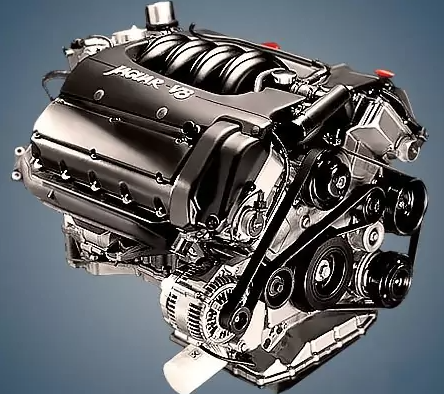
AJ-V8 series: AJ126, AJ27, AJ27S, AJ28, AJ33, AJ33S, AJ34, AJ34S, AJ133, and AJ133S.
Specifications
| Production years | 1998-2003 |
| Displacement, cc | 3996 3248 |
| Fuel system | distributed injection |
| Power output, hp | 290 (4.0 liters) 240 (3.2 liters) |
| Torque output, Nm | 393 (4.0 liters) 316 (3.2 liters) |
| Cylinder block | aluminum V8 |
| Block head | aluminum 32v |
| Cylinder bore, mm | 86 |
| Piston stroke, mm | 86 (4.0 liters) 70 (3.2 liters) |
| Compression ratio | 10.75 (4.0 liters) 10.5 (3.2 liters) |
| Features | DOHC |
| Hydraulic lifters | no |
| Timing drive | chain |
| Phase regulator | VVT at the intake (4.0 liters) no (3.2 liters) |
| Turbocharging | no |
| Recommended engine oil | 5W-30 |
| Engine oil capacity, liter | 7.3 |
| Fuel type | petrol |
| Euro standards | EURO 2/3 |
| Fuel consumption, L/100 km (for Jaguar XJ8 2000) — city — highway — combined |
16.9 9.0 11.9 |
| Engine lifespan, km | ~400 000 |
The engine was installed on:
- Jaguar XJ 6 (X308) in 1998 – 2003;
- Jaguar XK 1 (X100) in 1998 – 2002.
Disadvantages of the Jaguar AJ27 engine
The engines were initially covered in nikasil and were terrified of poor fuel.
When cast iron sleeves took the place of the coating in 1999, the shedding issue was resolved.
Sometimes the timing chain is shorter than 100,000 kilometers, making it a relatively small resource.
Keep an eye on the radiators’ condition because the aluminum unit is afraid of overheating.
Additional issues include sensor malfunctions and lubricant or antifreeze leaks.