
From 2002 to 2009, Jaguar produced the AJ33 4.2-liter V8 petrol engine, which was utilized in models like the XK8 and XJ8 as well as the S-Type, though it was most frequently referred to as the AJ36 there. This index included a 3.5-liter power unit in addition to the 4.2-liter engine.
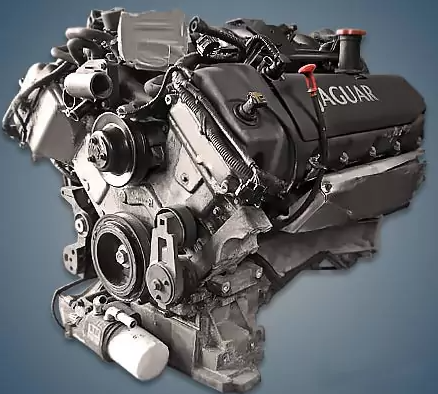
AJ-V8 series: AJ126, AJ27, AJ27S, AJ28, AJ33, AJ33S, AJ34, AJ34S, AJ133, AJ133S.
Specifications
| Production years | 2002-2009 |
| Displacement, cc | 3555 4196 |
| Fuel system | distributed injection |
| Power output, hp | 258 (3.5 liters) 298 (4.2 liters) |
| Torque output, Nm | 335 – 355 (3.5 liters) 411 (4.2 liters) |
| Cylinder block | aluminum V8 |
| Block head | aluminum 32v |
| Cylinder bore, mm | 86 |
| Piston stroke, mm | 76.5 (3.5 liters) 90.3 (4.2 liters) |
| Compression ratio | 11.0 |
| Features | DOHC |
| Hydraulic lifters | no |
| Timing drive | chain |
| Phase regulator | yes |
| Turbocharging | no |
| Recommended engine oil | 5W-30 |
| Engine oil capacity, liter | 6.0 |
| Fuel type | petrol |
| Euro standards | EURO 3 |
| Fuel consumption, L/100 km (for Jaguar XJ 2003) — city — highway — combined |
16.0 8.1 10.9 |
| Engine lifespan, km | ~450 000 |
The engine was installed on:
- Jaguar S-Type 1 (X200) in 2002 – 2004;
- Jaguar XJ 7 (X350) in 2003 – 2009;
- Jaguar XK 1 (X100) in 2002 – 2006; XK 2 (X150) in 2007 – 2009.
Disadvantages of the Jaguar AJ33 engine
Fuel consumption is high, but there are no significant issues with this unit’s dependability;
Additionally, there aren’t any troublesome VVT phase regulators;
The aluminum motor fears overheating, so keep an eye on the radiator and pump’s condition;
Investigate the reason behind the engine’s erratic performance, beginning with the upload of a new ECU firmware;
Sensor malfunctions and lubricant or antifreeze leaks are the remaining issues.