
From 2003 to 2009, the company produced the Jaguar AJD 2.7-liter V6 diesel engine, which was fitted to several popular British models, including the XJ, XF, and S-Type. Land Rover SUVs with the index 276DT had a similar power unit installed. This motor is a type of 2.7 HDi diesel engine.
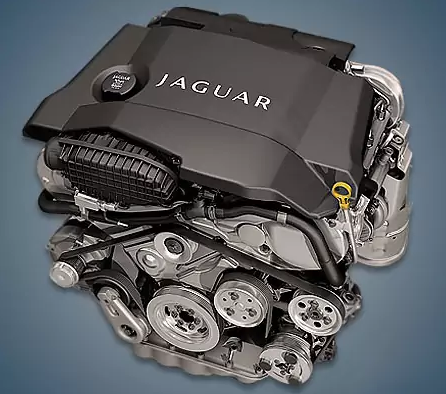
Specifications
| Production years | 2003-2009 |
| Displacement, cc | 2720 |
| Fuel system | Common Rail |
| Power output, hp | 207 |
| Torque output, Nm | 435 |
| Cylinder block | cast iron V6 |
| Block head | aluminum 24v |
| Cylinder bore, mm | 81 |
| Piston stroke, mm | 88 |
| Compression ratio | 17.3 |
| Features | intercooler |
| Hydraulic lifters | yes |
| Timing drive | chains & belt |
| Phase regulator | no |
| Turbocharging | two Garrett GTA1544VK |
| Recommended engine oil | 5W-40 |
| Engine oil capacity, liter | 6.5 |
| Fuel type | diesel |
| Euro standards | EURO 4 |
| Fuel consumption, L/100 km (for Jaguar XJ 2008) — city — highway — combined |
10.8 6.5 8.1 |
| Engine lifespan, km | ~240 000 |
The engine was installed on:
- Jaguar S-Type 1 (X200) in 2004 – 2007;
- Jaguar XF 1 (X250) in 2008 – 2009;
- Jaguar XJ 7 (X350) in 2003 – 2009.
Disadvantages of the Jaguar AJD engine
The Siemens fuel system with piezo injectors is the most problematic aspect of this;
Additionally, the liners are rapidly worn down to the point of wedge and crankshaft breakage;
Oil leaks, particularly through the heat exchanger, are another serious issue;
The thermostat, EGR valve, and crankshaft oil seals are the motor’s weak points. The timing belt needs to be changed every 120,000 kilometers or the valves will bend if it breaks.