
The most popular CX-5 and CX-8 crossovers in the production range are equipped with the Mazda SH-VPTS or Skyactiv-D 2.2-liter diesel engine, which has been assembled at the plant in Japan since 2013. The Japanese company’s passenger models have a similar diesel engine with the SH-VPTR index.
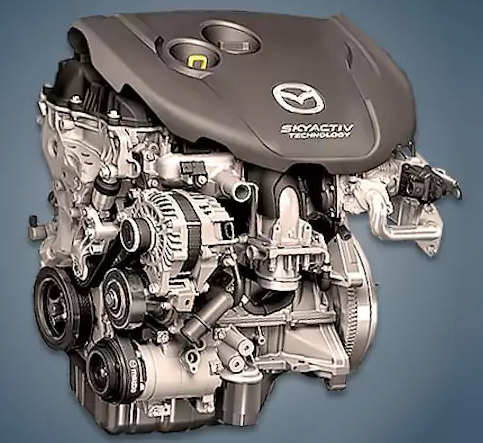
The S5-DPTS and S8-DPTS internal combustion engines are also part of the Skyactiv-D family.
The engine was mounted on:
- Mazda CX-5 KE in 2012 – 2017;
- Mazda CX-5 KF since 2017;
- Mazda CX-8 KG since 2017.
Specifications
| Production years | since 2013 |
| Displacement, cc | 2188 |
| Fuel system | Common Rail |
| Power output, hp | 175 – 190 |
| Torque output, Nm | 420 – 450 |
| Cylinder block | aluminum R4 |
| Block head | aluminum 16v |
| Cylinder bore, mm | 86 |
| Piston stroke, mm | 94.2 |
| Compression ratio | 14.4 |
| Features | DOHC, intercooler |
| Hydraulic lifters | yes |
| Timing drive | chain |
| Phase regulator | no |
| Turbocharging | Twin-Turbo |
| Recommended engine oil | 5W-30 |
| Engine oil capacity, liter | 5.8 |
| Fuel type | diesel |
| Euro standards | EURO 5/6 |
| Fuel consumption, L/100 km (for Mazda CX-5 2014) — city — highway — combined |
7.3 4.6 5.6 |
| Engine lifespan, km | ~250 000 |
Disadvantages of the SH-VPTS engine
The unreliable injector fastening makes this diesel engine extremely problematic.
They eventually come loose, which causes the oil channels to cok.
Long-term oil starvation frequently leads to engine failure.
The unit could die if the vacuum pump breaks during any run.