
The 10th generation Corona or V50 Camry model, also known as the Vista, was equipped with the 2.0-liter Toyota 3S-FSE direct injection D4 engine, which was manufactured between 1996 and 2003. This unit was the first to use the exclusive direct fuel injection system.
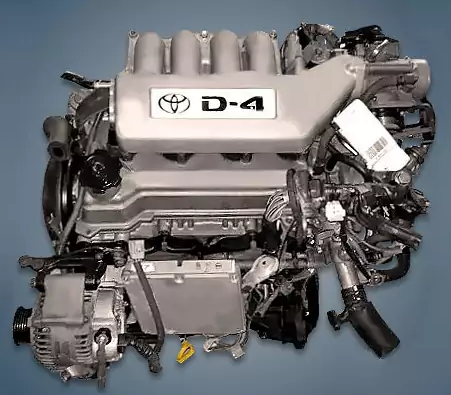
In 1996, the company unveiled its first D4 direct injection engine. The engine also got a variable-geometry intake manifold and a VVTi phase regulator. This power unit was identical to the third generation of 3S-FE engines in every other way. This is the same four-cylinder cast-iron block with a 16-valve aluminum cylinder head, a timing belt drive that turns the intake shaft, and a gear connecting it to the exhaust. There are no hydraulic compensators, so the valve clearances must be adjusted every 100,000 kilometers.
The engine remained unaltered until 2003, when a comparable 1AZ-FSE took its place.
The engines in the S family are 4S-Fi, 4S-FE, 3S-FC, 3S-FE, 3S-FSE, 3S-GE, 3S-GTE, and 5S-FE.
The engine was mounted on:
- Toyota Corona 11 (T210) in 1996 – 2001;
- Toyota Nadia 1 (XN10) in 1998 – 2001;
- Toyota Vista 5 (V50) in 1998 – 2003.
Specifications
| Production years | 1996-2003 |
| Displacement, cc | 1998 |
| Fuel system | direct injection D4 |
| Power output, hp | 145 |
| Torque output, Nm | 196 |
| Cylinder block | cast iron R4 |
| Block head | aluminum 16v |
| Cylinder bore, mm | 86 |
| Piston stroke, mm | 86 |
| Compression ratio | 11.0 |
| Hydraulic lifters | no |
| Timing drive | belt |
| Recommended engine oil | 5W-30, 5W-40 |
| Engine oil capacity, liter | 3.9 |
| Fuel type | petrol |
| Euro standards | EURO 3 |
| Fuel consumption, L/100 km (for Toyota Vista 2000) — city — highway — combined |
10.2 5.9 7.2 |
| Engine lifespan, km | ~300 000 |
| Weight, kg | 150 |
Disadvantages of the 3S-FSE engine
The most well-known and frequent issue with this engine is the high pressure fuel pump failing. As a result of extreme wear, the pump starts to push gasoline into the crankcase, diluting the oil.
The engine starts to choke and stall as a result of the variable geometry system wedging and the intake manifold rapidly becoming overgrown with soot due to the aggressive operation of the EGR valve.
The issue with the subpar connecting rod bolts prevented this power unit from passing. The cylinder block is destroyed when the connecting rods break, just like in the 3S-FE.
Here, the timing belt must rotate the oil pump and pump, which frequently wedges, in addition to the intake camshaft. Additionally, the valves bend here when the belt jumps or breaks.
After 200,000 kilometers, the unit frequently uses oil, vibrates because of support wear, has unreliable sensors, and has trouble with diagnostics. Remember to check the valve clearances on a regular basis because there are no hydraulic lifters here.