
Only a few European versions of the Lupo subcompact model were equipped with the 1.4-liter Volkswagen ARR 1.4 FSI engine, which the company produced between 2000 and 2004. This power unit became the company’s first direct fuel injection engine to be mass-produced.
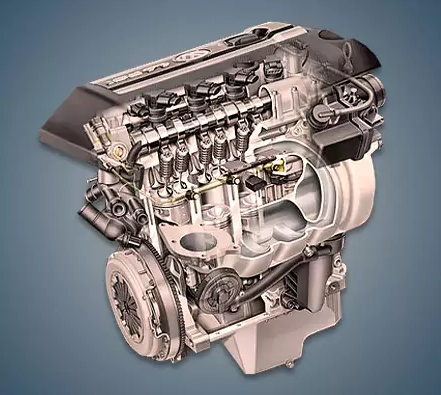
ARR, BKG, BAD, BAG, and BLF are all part of the EA111-FSI series.
Specifications
| Production years | 2000-2004 |
| Displacement, cc | 1390 |
| Fuel system | direct injection |
| Power output, hp | 105 |
| Torque output, Nm | 130 |
| Cylinder block | aluminum R4 |
| Block head | aluminum 16v |
| Cylinder bore, mm | 76.5 |
| Piston stroke, mm | 75.6 |
| Compression ratio | 11.5 |
| Features | DOHC |
| Hydraulic lifters | yes |
| Timing drive | belt |
| Phase regulator | yes |
| Turbocharging | no |
| Recommended engine oil | 5W-30 |
| Engine oil capacity, liter | 3.5 |
| Fuel type | petrol |
| Euro standards | EURO 4 |
| Fuel consumption, L/100 km (for VW Lupo 2002) — city — highway — combined |
6.3 4.1 4.9 |
| Engine lifespan, km | ~240 000 |
The engine was installed on:
- Volkswagen Lupo 1 (6X) in 2000 – 2004.
Disadvantages of the VW ARR engine
This engine requires high-quality gasoline, just like all direct fuel injection engines.
Soot rapidly overgrows intake valves, reducing engine compression.
Maintaining a complex intake system with numerous sensors is challenging.
Here, ignition coils don’t last long, so skilled drivers always have spare parts on hand.
Rings frequently lie down and the oil burn starts after 100–120 thousand kilometers.