
The company has only been producing the 2.0-liter turbocharged Great Wall GW4C20NT since 2018, and it powers the highly sought-after F7 crossover and the comparable F7x. This motor is sometimes confused with its predecessor, which had the GW4C20 index.
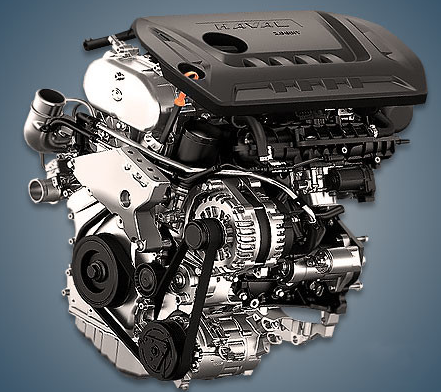
GW4C20, GW4C20A, GW4C20B, and GW4C20NT are your own 2.0-liter engines.
Specifications
| Production years | since 2018 |
| Displacement, cc | 1967 |
| Fuel system | direct injection |
| Power output, hp | 190 |
| Torque output, Nm | 340 |
| Cylinder block | cast iron R4 |
| Block head | aluminum 16v |
| Cylinder bore, mm | 82.5 |
| Piston stroke, mm | 92 |
| Compression ratio | 9.6 |
| Features | DOHC |
| Hydraulic lifters | yes |
| Timing drive | chain |
| Phase regulator | on all shafts |
| Turbocharging | yes |
| Recommended engine oil | 5W-40 |
| Engine oil capacity, liter | 5.0 |
| Fuel type | petrol |
| Euro standards | EURO 5 |
| Fuel consumption, L/100 km (for Haval F7 2020) — city — highway — combined |
11.6 7.2 8.8 |
| Engine lifespan, km | ~240 000 |
| Weight, kg | 175 |
The engine was installed on:
- Haval F7 I since 2018;
- Haval F7x I since 2018;
- Haval Dargo I since 2020.
Disadvantages of the Great Wall GW4C20NT engine
Although it hasn’t been manufactured for very long, this turbo engine has proven to be dependable;
The direct injection system’s carbon deposits on the intake valves are the primary issue;
There were instances of turbine failure brought on by bent impellers or burst pipes;
Failures in the fuel pump and ignition system can cause the owner a great deal of trouble;
Following several fires, a recall campaign was launched to replace fuel pipes.