
The 1.4-liter Peugeot EP3 or 8FS engine, which was manufactured at the Duvrin plant between 2007 and 2013, was fitted to a number of the French company’s well-known small cars, including the 207 and 308. A Euro 5 version of this unit debuted in 2010 under the EP3C index.
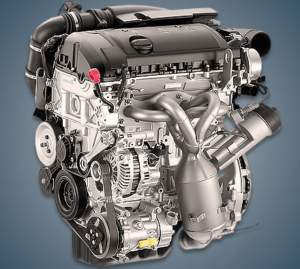
The Prince family’s atmospheric engines are EP3, EP3C, EP6, EP6C, and EP6CB.
Engineers from BMW and PSA developed the 1.4-liter Prince family engine, which made its debut on the Peugeot 207 and 308 models in 2007. The Mini One had an engine that was comparable to the N12B14A. A timing chain, Vanos type phase regulators, a 16-valve cylinder head with hydraulic compensators, an aluminum cylinder block, and a Valvetronic throttleless control system are all part of the design. These units also had an extra electric pump and an adjustable oil pump.
There were turbo engines with direct injection among the comparable 1.6-liter power units, while the 1.4-liter engines were only atmospheric and had distributed fuel injection.
Specifications
| Production years | 2007-2013 |
| Displacement, cc | 1397 |
| Fuel system | injector |
| Power output, hp | 95 |
| Torque output, Nm | 136 |
| Cylinder block | aluminum R4 |
| Block head | aluminum 16v |
| Cylinder bore, mm | 77 |
| Piston stroke, mm | 75 |
| Compression ratio | 11.0 |
| Hydraulic lifters | yes |
| Timing drive | chain |
| Phase regulator | yes |
| Turbocharging | no |
| Recommended engine oil | 5W-30, 5W-40 |
| Engine oil capacity, liter | 4.25 |
| Fuel type | petrol |
| Euro standards | EURO 4 |
| Fuel consumption, L/100 km (for Peugeot 207 2008) — city — highway — combined |
7.6 4.8 5.8 |
| Engine lifespan, km | ~200 000 |
| Weight, kg | 118 |
The engine was installed on:
- Peugeot 207 I (A7) in 2007 – 2013;
- Peugeot 308 I (T7) in 2007 – 2011.
Disadvantages of the Peugeot EP3 engine
First of all, the motors in this series are renowned for having few timing chain components. The stars, tensioner, damper, and chain itself may need to be replaced even after 50,000 kilometers. This is particularly true for the engines from the initial years of production, after which the reliability marginally improved.
The second most common issue with the motor is the wedging of the vacuum pump, which causes the exhaust camshaft and the drive’s sprocket gear to break. When the valves bend, the pump’s wedge frequently becomes an open timing chain.
Because of piston rings, valve stem seal wear, or crankcase ventilation membranes, power units in this family typically use oil even at low mileage. They are also infamous for their frequent and widespread grease and antifreeze leaks.
The Valvetronic system and Vanos phase controllers are two of these units’ weak points. Valve seats are frequently destroyed when they fall straight into the cylinders. Additionally, a number of devices, including pumps, thermostats, and lambda probes, are merely regarded as consumables in this context.