
From 1990 to 1993, the company produced the 3.5-liter Toyota 1PZ diesel engine, which was mounted on the well-known Land Cruiser 70 all-wheel drive SUV. The Coaster passenger bus in the twentieth body also has this unit.
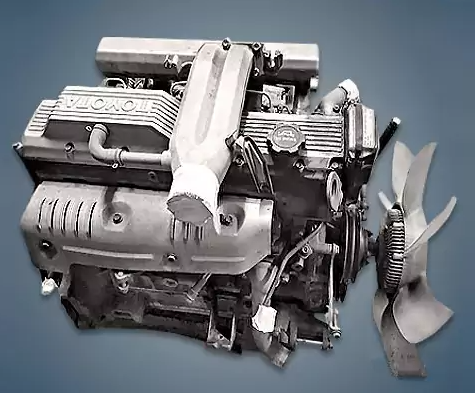
This naturally aspirated diesel is very basic in terms of its specifications, so enthusiasts of fast driving are unlikely to enjoy buying it. However, the engine is specifically made for an SUV and works flawlessly.
It is important to pay particular attention to the extremely early torque in the power unit’s technical characteristics. The engine pulls well at the bottom, runs flawlessly over the whole revolution range, and doesn’t interfere with all-wheel drive transmissions.
Specifications
| Production years | 1990-1993 |
| Displacement, cc | 3469 |
| Fuel system | vortex chamber IDI |
| Power output, hp | 115 |
| Torque output, Nm | 230 |
| Cylinder block | cast iron R5 |
| Block head | cast iron 10v |
| Cylinder bore, mm | 94 |
| Piston stroke, mm | 100 |
| Compression ratio | 22.7 |
| Features | no |
| Hydraulic lifters | no |
| Timing drive | belt |
| Phase regulator | no |
| Turbocharging | no |
| Recommended engine oil | 10W-30 |
| Engine oil capacity, liter | 9.0 |
| Fuel type | diesel |
| Euro standards | EURO 1 |
| Fuel consumption, L/100 km (for Toyota Land Cruiser 70 1993) — city — highway — combined |
13.4 9.9 11.1 |
| Engine lifespan, km | ~500 000 |
| Weight, kg | 280 |
The engine was installed on:
- Toyota Land Cruiser 70 (J70) in 1990 – 1993;
- Toyota Coaster 2 (B20) in 1990 – 1993.
Disadvantages of the Toyota 1PZ engine
There are no typical issues with the outstanding reliability unit;
The timing belt in the engine needs to be changed roughly every 100,000 kilometers;
The thermal clearances of the valves need to be changed because there are no hydraulic compensators.