
The Voyager RS minivan and the KJ Cherokee/Liberty SUV were equipped with Chrysler’s 2.5-liter ENJ or 2.5 CRD diesel engine from 2000 to 2007. The R425 DOHC is another name for this diesel engine, which is produced by VM Motori, an Italian company.
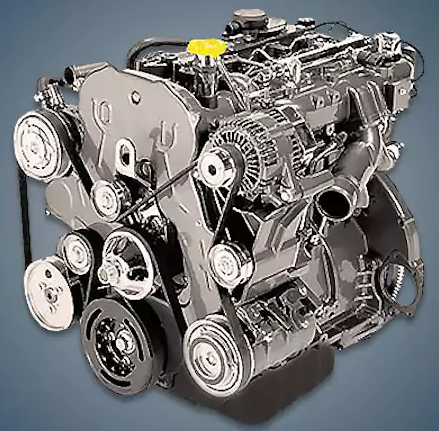
ENC, ENJ, ENS, ENR, EXF, EXJ, EXN, and EXA are all part of the VM Motori series.
Specifications
| Production years | 2000-2007 |
| Displacement, cc | 2499 |
| Fuel system | Common Rail |
| Power output, hp | 141 |
| Torque output, Nm | 340 |
| Cylinder block | cast iron R4 |
| Block head | aluminum 16v |
| Cylinder bore, mm | 92 |
| Piston stroke, mm | 94 |
| Compression ratio | 17.5 |
| Features | DOHC |
| Hydraulic lifters | yes |
| Timing drive | belt |
| Phase regulator | no |
| Turbocharging | IHI RHF4H |
| Recommended engine oil | 5W-30 |
| Engine oil capacity, liter | 6.0 |
| Fuel type | diesel |
| Euro standards | EURO 3 |
| Fuel consumption, L/100 km (for Chrysler Voyager 2003) — city — highway — combined |
9.9 6.4 7.7 |
| Engine lifespan, km | ~300 000 |
The engine was installed on:
- Chrysler Voyager 4 (RG) in 2000 – 2007;
- Jeep Cherokee 3 (KJ) in 2001 – 2007.
Disadvantages of the ENJ engine
The diesel engine has a dependable Bosch injection pump, but the control valve frequently malfunctions; nozzles are not the best resource because sprayers fly into them; the timing belt has a 150,000-kilometer lifespan and typically only breaks the rocker when it breaks;
The flow meter frequently becomes dirty and malfunctions as a result of the crankcase ventilation valve’s membrane being destroyed; other weak points include a thermostat, a booster pump, and a crankshaft sensor.