
From 1995 to 2010, the 2.4-liter 16-valve Chrysler EDZ engine was manufactured in Mexico and fitted to a number of the company’s well-known models, including the Cirrus, Sebring, Stratus, and PT Cruiser.
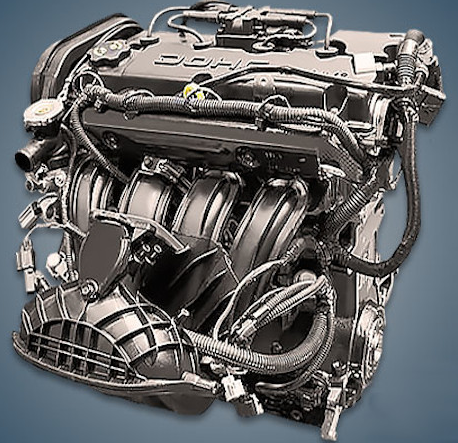
Internal combustion engines (EBD, ECB, ECC, ECH, EDT, and EDV) are also part of the Neon series.
A 2.4-liter engine debuted in the Dodge and Plymouth lineup of compact cars in 1995. With distributed fuel injection, a thin-walled cast iron block, an aluminum 16-valve head with hydraulic compensators, a timing belt drive, and the then-current dual-coil ignition system, this is the most popular gasoline engine by design. This power unit’s block of balance shafts in the pan was one of its features.
A turbo version of the engine with 170 horsepower and 293 Nm was available in the Mexican market from 1996 to 2000. Charged versions of the Dodge Stratus R/T or Cirrus R/T were equipped with such an engine.
The engine was installed on:
- Chrysler Cirrus 1 (JA) in 1995 – 2000;
- Chrysler PT Cruiser 1 (PT) in 2000 – 2010;
- Chrysler Sebring 1 (JX) in 1995 – 2000;
- Chrysler Sebring 2 (JR) in 2000 – 2006;
- Chrysler Voyager 3 (GS) in 1995 – 2000;
- Chrysler Voyager 4 (RG) in 2000 – 2007;
- Dodge Caravan 3 (GS) in 1995 – 2000;
- Dodge Caravan 4 (RG) in 2000 – 2007;
- Dodge Stratus 1 (JX) in 1995 – 2000;
- Dodge Stratus 2 (JR) in 2000 – 2006;
- Jeep Liberty 1 (KJ) in 2001 – 2005;
- Jeep Wrangler 2 (TJ) in 2003 – 2006;
- Plymouth Breeze in 1995 – 2000;
- Plymouth Voyager 3 in 1996 – 2000;
- Gaz Volga 31105 in 2006 – 2010;
- Gaz Volga Siber in 2008 – 2010.
Specifications
| Production years | 1995-2010 |
| Displacement, cc | 2429 |
| Fuel system | injector |
| Power output, hp | 137 – 152 |
| Torque output, Nm | 210 – 230 |
| Cylinder block | cast iron R4 |
| Block head | aluminum 16v |
| Cylinder bore, mm | 87.5 |
| Piston stroke, mm | 101 |
| Compression ratio | 9.4 – 9.5 |
| Features | DOHC |
| Hydraulic lifters | yes |
| Timing drive | belt |
| Phase regulator | no |
| Turbocharging | no |
| Recommended engine oil | 5W-30, 5W-40 |
| Engine oil capacity, liter | 5.5 |
| Fuel type | petrol |
| Euro standards | EURO 3/4 |
| Fuel consumption, L/100 km (for Chrysler Sebring 2005) — city — highway — combined |
13.4 7.9 9.9 |
| Engine lifespan, km | ~500 000 |
Disadvantages of the EDZ engine
This motor’s thermostat frequently passes through the body, and it cannot withstand overheating at all. Therefore, it is not uncommon to replace the gasket by grinding the mating surfaces;
Burnout of one or more exhaust valves is another frequent issue. Oil soot on the plate or worn guide bushings are typically the cause; an electrician is responsible for a lot of issues with this power unit, including the lubricant pressure sensor frequently flowing and the crankshaft and camshaft position sensors failing;
Additionally, they frequently complain online about the gasoline vapor recovery system’s malfunctions as well as the limited resources of the engine mounts, high-voltage wires, and balancer unit chain.