
From 1989 to 2010, the company produced the Chrysler EGA 3.3-liter V6 gasoline engine, which was fitted to numerous models, including the well-known Town & Country, Caravan, and Voyager minivans. This unit had an ethanol or FlexFuel version with its own EGM index.
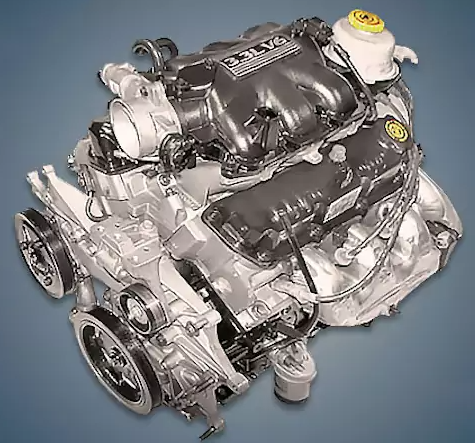
Internal combustion engines (EGH) are also part of the Pushrod series.
The engine was installed on:
- Chrysler Concorde 1 in 1992 – 1997;
- Chrysler Grand Voyager 2 (ES) in 1991 – 1995;
- Chrysler Grand Voyager 3 (GH) in 1995 – 2000;
- Chrysler Grand Voyager 4 (GY) in 2001 – 2007;
- Chrysler Imperial 7 in 1989 – 1993;
- Chrysler New Yorker 13 in 1990 – 1993;
- Chrysler Town & Country 1 (AS) in 1989 – 1990;
- Chrysler Town & Country 2 (ES) in 1990 – 1995;
- Chrysler Town & Country 3 (GH) in 1996 – 2000;
- Chrysler Town & Country 4 (GY) in 2000 – 2007;
- Chrysler Town & Country 5 (RT) in 2007 – 2010;
- Chrysler Voyager 2 (ES) in 1990 – 1995;
- Chrysler Voyager 3 (GS) in 1995 – 2000;
- Chrysler Voyager 4 (RG) in 2000 – 2007;
- Dodge Caravan 1 (AS) in 1989 – 1990;
- Dodge Caravan 2 (ES) in 1990 – 1995;
- Dodge Caravan 3 (GS) in 1996 – 2000;
- Dodge Caravan 4 (RG) in 2000 – 2007;
- Dodge Grand Caravan 1 (AS) in 1989 – 1990;
- Dodge Grand Caravan 2 (ES) in 1990 – 1995;
- Dodge Grand Caravan 3 (GH) in 1996 – 2000;
- Dodge Grand Caravan 4 (GY) in 2000 – 2007;
- Dodge Grand Caravan 5 (RT) in 2007 – 2010;
- Dodge Dynasty 1 in 1990 – 1993;
- Dodge Intrepid 1 in 1992 – 1997;
- Eagle Vision 1 (LH) in 1992 – 1997;
- Plymouth Grand Voyager 1 in 1989 – 1990;
- Plymouth Grand Voyager 2 in 1990 – 1995;
- Plymouth Grand Voyager 3 in 1996 – 2000;
- Plymouth Voyager 1 in 1989 – 1990;
- Plymouth Voyager 2 in 1990 – 1995;
- Plymouth Voyager 3 in 1996 – 2000.
Specifications of the 1st engine generation 1989 – 2000
| Production years | 1989 – 2000 |
| Displacement, cc | 3301 |
| Fuel system | injector |
| Power output, hp | 150 – 162 |
| Torque output, Nm | 245 – 275 |
| Cylinder block | cast iron V6 |
| Block head | aluminum 12v |
| Cylinder bore, mm | 93 |
| Piston stroke, mm | 81 |
| Compression ratio | 8.9 |
| Features | OHV |
| Hydraulic lifters | yes |
| Timing drive | chain |
| Phase regulator | no |
| Turbocharging | no |
| Recommended engine oil | 5W-30 |
| Engine oil capacity, liter | 4.0 |
| Fuel type | petrol |
| Euro standards | EURO 2/3 |
| Engine lifespan, km | ~400 000 |
Specifications of the 2nd engine generation 2000 – 2010
| Production years | 2000 – 2010 |
| Displacement, cc | 3301 |
| Fuel system | injector |
| Power output, hp | 180 |
| Torque output, Nm | 285 |
| Cylinder block | cast iron V6 |
| Block head | aluminum 12v |
| Cylinder bore, mm | 93 |
| Piston stroke, mm | 81 |
| Compression ratio | 9.4 |
| Features | OHV |
| Hydraulic lifters | yes |
| Timing drive | chain |
| Phase regulator | no |
| Turbocharging | no |
| Recommended engine oil | 5W-30 |
| Engine oil capacity, liter | 4.7 |
| Fuel type | 92 |
| Euro standards | EURO 3/4 |
| Fuel consumption, L/100 km (for Chrysler Voyager 2002) — city — highway — combined |
17.3 9.9 12.7 |
| Engine lifespan, km | ~350 000 |
Disadvantages of the EGA engine
This series’ power units are dependable, but they use a lot of fuel;
Up until 2000, the motor’s valve rocker axle supports frequently broke;
They started installing a plastic intake manifold in 2002, and it frequently cracks;
Antifreeze leaks are common here, and aluminum heads frequently warp from overheating;
The timing chain may stretch and oil consumption may start to show after 200,000 kilometers of operation.