
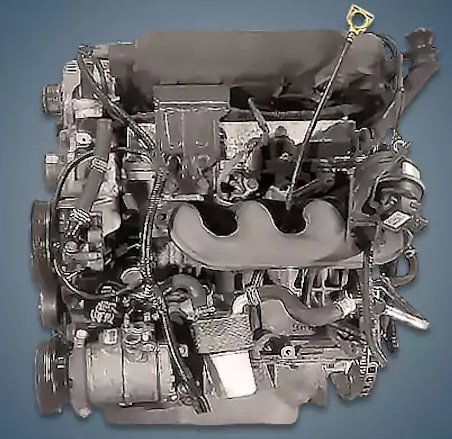
Only the pre-facelift version of the well-liked US Pacifica model had the Chrysler EGN 3.5-liter V6 gasoline engine, which was manufactured in the USA between 2003 and 2006. An EGR valve and a variable geometry intake manifold were installed in the power unit.
Internal combustion engines (EER, EGW, EGE, EGG, EGF, EGS, and EGQ) are also part of the LH series.
There are roughly ten different versions of Chrysler’s 3.5-liter V6 engines, including the V6 EGN. The engines are structurally similar to one another and are based on a 3.3-liter cast-iron engine block. Along with other innovations, they increased the cylinder’s diameter and compression ratio.
The engine was installed on:
- Chrysler Pacifica 1 (CS) in 2003 – 2006.
Specifications
| Production years | 2003 – 2006 |
| Displacement, cc | 3518 |
| Fuel system | injector |
| Power output, hp | 253 |
| Torque output, Nm | 340 |
| Cylinder block | aluminum V6 |
| Block head | aluminum 24v |
| Cylinder bore, mm | 96 |
| Piston stroke, mm | 81 |
| Compression ratio | 10.1 |
| Features | SOHC |
| Hydraulic lifters | yes |
| Timing drive | belt |
| Phase regulator | no |
| Turbocharging | no |
| Recommended engine oil | 5W-30 |
| Engine oil capacity, liter | 5.2 |
| Fuel type | petrol |
| Euro standards | EURO 3 |
| Fuel consumption, L/100 km (for Chrysler Pacifica 2005) — city — highway — combined |
13.8 9.2 11.1 |
| Engine lifespan, km | ~320 000 |
Disadvantages of the EGN engine
Oil channel slagging and frequent overheating are known issues with this unit;
Rapid liner wear and subsequent motor jamming are caused by a lack of lubrication;
Additionally, because of throttle and EGR valve contamination, the speed frequently floats here;
Antifreeze leaks frequently occur from beneath the heater tube or pump gasket; exhaust valves eventually carbonize and lose their ability to close firmly.