
From 2006 to 2010, the American company produced the 3.5-liter V6 Chrysler EGF engine, which was fitted to its most well-known vehicles, including the Sebring, Avenger, and Journey. This upgraded version of the motor was intended to be installed transversely beneath an automobile’s hood.
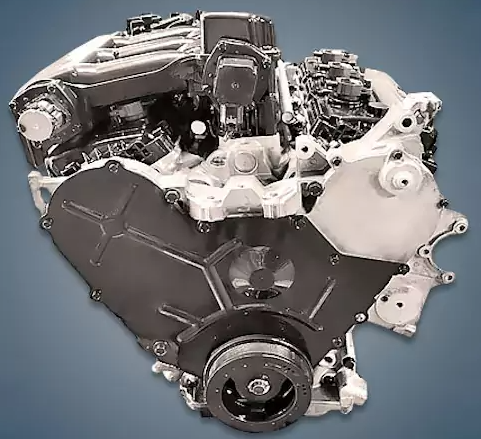
The internal combustion engines EER, EGW, EGE, EGG, EGN, EGS, and EGQ are also part of the LH series.
The engine was installed on:
- Chrysler Sebring 3 (JS) in 2006 – 2010;
- Dodge Avenger 1 (JS) in 2006 – 2010;
- Dodge Journey 1 (JC) in 2008 – 2010.
Specifications
| Production years | 2006-2010 |
| Displacement, cc | 3518 |
| Fuel system | injector |
| Power output, hp | 235 |
| Torque output, Nm | 325 |
| Cylinder block | aluminum V6 |
| Block head | aluminum 24v |
| Cylinder bore, mm | 96 |
| Piston stroke, mm | 81 |
| Compression ratio | 10.1 |
| Features | SOHC |
| Hydraulic lifters | yes |
| Timing drive | belt |
| Phase regulator | no |
| Turbocharging | no |
| Recommended engine oil | 5W-30 |
| Engine oil capacity, liter | 5.2 |
| Fuel type | petrol |
| Euro standards | EURO 3 |
| Fuel consumption, L/100 km (for Chrysler Sebring 2008) — city — highway — combined |
12.7 8.8 10.2 |
| Engine lifespan, km | ~350 000 |
Disadvantages of the EGF engine
The motor’s primary issue is its narrow oil channels, which easily become slagged. This causes hydraulic lifters, liners, and internal combustion engines to run out of oil;
Because of carbon buildup on the exhaust valves, compression may also decrease here;
A dirty throttle or EGR is typically the cause of floating idle.
Leaky pump gaskets are typically the cause of antifreeze leaks.