
The second generation of the Bravo model, which is highly popular in the European market, was equipped with the 2.0 liter diesel Fiat 198A5000 or 2.0 Multijet engine, which was assembled between 2008 and 2014. A comparable third-generation Lancia Delta also has this power unit under the hood.
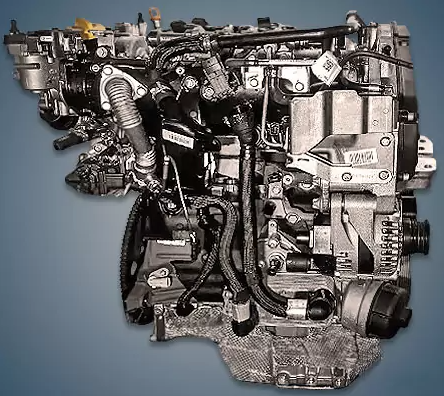
Multijet II family: 199B1000, 198A2000, 198A3000, 198A5000, 250A1000, 263A1000.
Specifications
| Production years | 2008-2014 |
| Displacement, cc | 1956 |
| Fuel system | Common Rail |
| Power output, hp | 165 |
| Torque output, Nm | 360 |
| Cylinder block | cast iron R4 |
| Block head | aluminum 16v |
| Cylinder bore, mm | 83 |
| Piston stroke, mm | 90.4 |
| Compression ratio | 16.5 |
| Features | DOHC, intercooler |
| Hydraulic lifters | yes |
| Timing drive | belt |
| Phase regulator | no |
| Turbocharging | Garrett GTB1549V |
| Recommended engine oil | 5W-30 |
| Engine oil capacity, liter | 4.9 |
| Fuel type | diesel |
| Euro standards | EURO 5 |
| Fuel consumption, L/100 km (for Fiat Bravo 2011) — city — highway — combined |
6.9 4.3 5.3 |
| Engine lifespan, km | ~270 000 |
| Weight, kg | 185 |
The engine was installed on:
- Fiat Bravo II (198) in 2008 – 2012;
- Lancia Delta III (844) in 2008 – 2014.
Disadvantages of the Fiat 198A5000 engine
The oil pump’s decreased performance frequently causes the liners to rotate;
The pump gasket’s wear, which causes air to pass through, is typically the cause;
Although the turbine has a long lifespan here, the boost air supply pipe frequently bursts;
All gaskets dry out and lubricant and antifreeze leaks start closer to 100,000 kilometers;
The diesel particulate filter and the EGR valve perform routine tasks, just like in many diesel engines.