
The top models of the second generation Fiat Croma were equipped with the 2.4-liter Fiat 939A3000 or Croma 2.4 multijet engine, which was assembled between 2005 and 2010 and came with an automatic transmission. The Alfa Romeo 159, Brera, and comparable Spider also use this diesel under the hood.
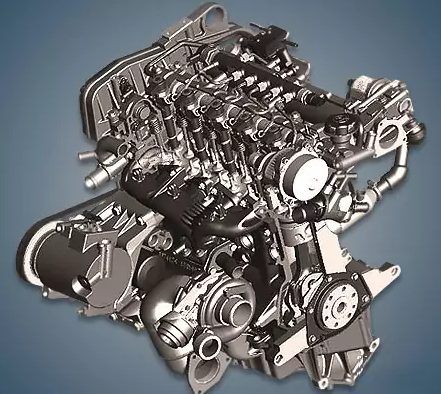
Multijet I family: 199A2000, 199A3000, 186A9000, 192A8000, 937A5000, 839A6000, 939A3000.
Specifications
| Production years | 2005-2010 |
| Displacement, cc | 2387 |
| Fuel system | Common Rail |
| Power output, hp | 200 |
| Torque output, Nm | 400 |
| Cylinder block | cast iron R5 |
| Block head | aluminum 20v |
| Cylinder bore, mm | 82 |
| Piston stroke, mm | 90.4 |
| Compression ratio | 17.0 |
| Features | DOHC, intercooler |
| Hydraulic lifters | yes |
| Timing drive | belt |
| Phase regulator | no |
| Turbocharging | BorgWarner BV50 (Garrett GTB2056V on some versions) |
| Recommended engine oil | 5W-40 |
| Engine oil capacity, liter | 5.4 |
| Fuel type | diesel |
| Euro standards | EURO 4 |
| Fuel consumption, L/100 km (for Fiat Croma II 2007) — city — highway — combined |
10.3 5.4 7.2 |
| Engine lifespan, km | ~300 000 |
| Weight, kg | 215 |
The engine was installed on:
- Alfa Romeo 159 (Type 939) in 2005 – 2010;
- Alfa Romeo Brera I (Type 939) in 2006 – 2010;
- Alfa Romeo Spider VI (Type 939) in 2007 – 2010;
- Fiat Croma II (194) in 2005 – 2010.
Disadvantages of the Fiat 939A3000 engine
The engine’s primary issue is the intake swirl flaps falling off; the weak oil pump and balancer drive chain come in second;
The geometry change system frequently fails, but the turbocharger is dependable;
An expensive block head frequently results from a clogged particulate filter;
The mass air flow sensor, the EGR valve, and the crankshaft damper pulley are the motor’s weak points.