
From 1992 to 2003, the company assembled the 5.9-liter Jeep EML or Magnum 360 V8 engine, which was installed in Durango and Grand Cherokee SUVs as well as Ram and Dakota pickups. This power unit is renowned for being picky about the fuel it uses.
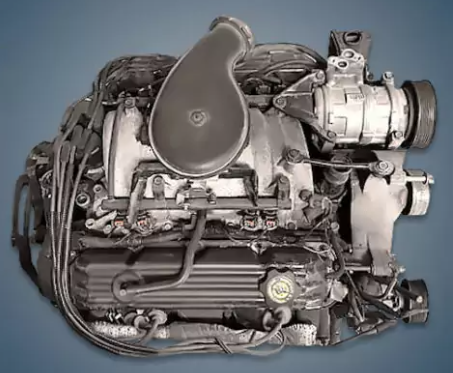
ELF internal combustion engines are also part of the Magnum series.
The engine was mounted on:
- Dodge Dakota 2 (DN) in 1998 – 2003;
- Dodge Durango 1 (DN) in 1997 – 2003;
- Dodge Ram 1 (BR) in 1992 – 1993;
- Dodge Ram 2 (DR) in 1993 – 2002;
- Dodge Ram 3 (DT) in 2002 – 2003;
- Dodge Ramcharger 3 in 1998 – 2001;
- Jeep Grand Cherokee 1 (ZJ) in 1997 – 1998.
Specifications
| Production years | 1992-2003 |
| Displacement, cc | 5899 |
| Fuel system | injector |
| Power output, hp | 230 – 250 |
| Torque output, Nm | 440 – 470 |
| Cylinder block | cast iron V8 |
| Block head | cast iron 16v |
| Cylinder bore, mm | 101.6 |
| Piston stroke, mm | 90.9 |
| Compression ratio | 8.7 |
| Features | OHV |
| Hydraulic lifters | yes |
| Timing drive | chain |
| Phase regulator | no |
| Turbocharging | no |
| Recommended engine oil | 5W-30 |
| Fuel type | petrol |
| Euro standards | EURO 2 |
| Fuel consumption, L/100 km (for Jeep Grand Cherokee 1998) — city — highway — combined |
22.1 13.8 17.2 |
| Engine lifespan, km | ~400 000 |
Disadvantages of the EML engine
This engine uses more than 20 liters per 100 kilometers and only likes 98th grade gasoline;
Cracks between the cylinder head’s valves are typically caused by using the incorrect fuel;
Hydraulic lifters may simply stick if you cut back on lubrication;
Furthermore, this engine is extremely heavy, which severely restricts the resources available to its supports;
Internal combustion engines’ weak points—the exhaust manifold, gasoline pump, and pump—are also taken into account.